
By Tino Kalayil, Technical Director of the Central Region for the Concrete Masonry Checkoff’s Block Design Collective
For architects, engineers, contractors, and business leaders in Nebraska, school and community construction is about more than meeting a schedule or a budget. It’s about protecting people, safeguarding investments and creating buildings that stand the test of time.
As new educational facilities rise across the state, one material is proving itself again and again: concrete masonry unit (CMU) construction.
Why CMU Belongs at the Center of School Design
In today’s risk landscape, the buildings themselves must be part of the safety plan. Policies and procedures can guide what people do in an emergency, but walls built from CMU actively protect without additional action or cost.
Key advantages include:
- Fire Resistance: Concrete masonry is inherently fire resistant, offering a layer of protection without reliance on additional fireproofing treatments.
- Storm Resilience: The strength and durability of CMU structures help safeguard buildings from high winds, flying debris and other unforeseen threats. That’s why emergency shelters and critical infrastructure are often made of concrete block.
- Acoustic Performance: CMU absorbs and blocks noise, improving learning environments and student housing alike.
- Durability: Heavy-use spaces, like corridors, cafeterias, and gyms, hold their integrity and appearance for decades with minimal upkeep.
Nebraska’s Funding Reality
School construction in Nebraska faces serious financial headwinds. The state’s Education Future Fund (EFF), created in 2023 with $1 billion plus $250 million annually, is projected to run out by 2027–28 as rising costs outpace funding by more than $150 million per year. This uncertainty leaves districts from Omaha to rural communities struggling to plan long-term investments.
At the district level, it can be a struggle to gain voter approval for new school bonds. While Lincoln Public Schools recently secured a $290 million bond to build new high schools and elementary facilities, neighboring districts in Waverly, Raymond Central, Tecumseh and Bennington have all seen major bond proposals fail. Rising construction costs and property tax concerns have made funding unpredictable, even as the demand for safe, modern learning spaces grows.
In this environment, every dollar counts. That makes material choices like CMU even more valuable as lower maintenance, energy savings and potential insurance benefits translate into long-term financial stability for districts already under funding pressure.
Case Study: Southeast Community College, Milford
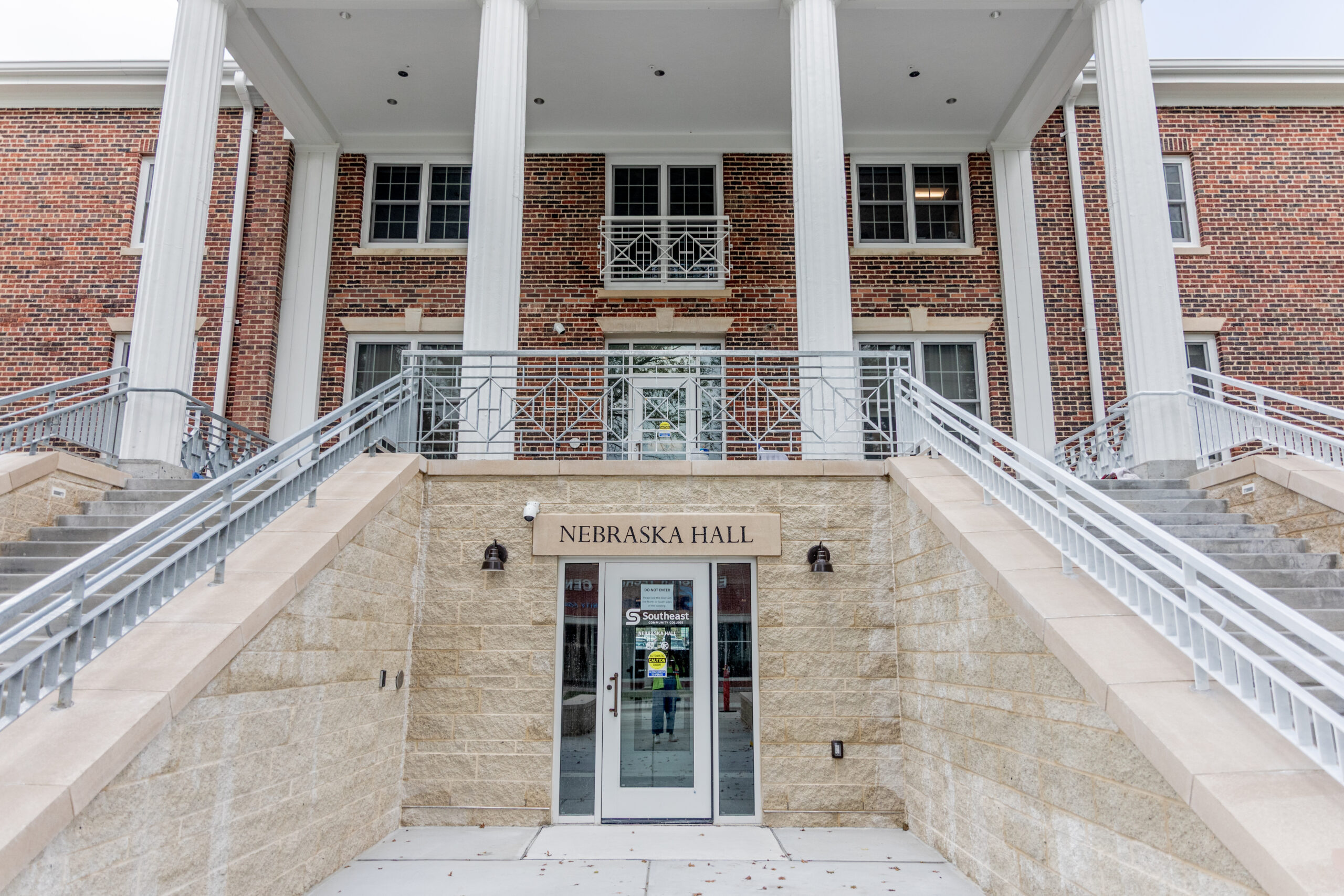
Nebraska collegiate institutions are also choosing CMU. Southeast Community College’s Nebraska Hall in Milford, Nebraska, was originally constructed in 1922 as a hospital, but most recently served as a dormitory. It was recently renovated to meet the evolving needs of the campus, including adding a new front door, housing administrative offices, academic services, and other student amenities like a computer lab and coffee shop.

Concrete masonry was incorporated into the project to preserve the building’s historic charm, while also delivering fire resistance, storm security and structural longevity. It also provides benefits that directly matter to a college’s bottom line, including lower maintenance needs, energy efficiency with its thermal mass and the potential for reduced insurance premiums.

“This project really highlights what CMU can do for education spaces,” said Ryan Hansen, Vice President of T. Hansen Construction, the project’s masonry contractor. “The residence halls needed to be safe, durable, and built to last, and concrete masonry checked every box. It’s a beautiful solution that gives parents and schools peace of mind that students who are living away from home are living in a safe, protected place.”
Community Resilience and Business Value
But Nebraska schools and colleges are more than just classrooms. They’re anchors for entire communities. When facilities double as storm shelters or safe havens, their construction materials take on even greater importance.
“Schools are the heartbeat of our communities,” said Katie Bugbee, board member for the Nebraska Masonry Alliance. “When districts and colleges like SCC choose block, they’re not just creating a safe learning environment. They’re building a resilient hub that protects and serves the broader community as well.”
For business leaders and facility managers, the message is just as compelling: CMU construction can reduce operational risk, stabilize long-term costs and deliver tangible return on investment while elevating community trust.
Design Support for AEC Professionals
With public educational construction spending topping $111 billion nationwide in 2025, now is the time for decision-makers in Nebraska to rethink school safety from the inside out.
To help architects, engineers and builders maximize the safety, durability and efficiency of concrete masonry projects, the Block Design Collective (BDC) provides free design assistance. Backed by the Concrete Masonry Checkoff, the BDC offers early-stage support and technical expertise for schools and other critical infrastructure. For more information, contact Tino Kalayil tkalayil@blockdesign.org or visit beautyofblock.com.