By Chuck Rotondo, Northeast Regional Director, Block Design Collective
Across Greater Philadelphia, fire remains a persistent and ongoing risk for property owners and building operators. In 2024, the Philadelphia Fire Department responded to more than 2,800 structure fires. Nearly eight per day.
For developers and owners, that reality shapes early design decisions. It influences how buildings are constructed. How risk is managed. How occupants are protected.
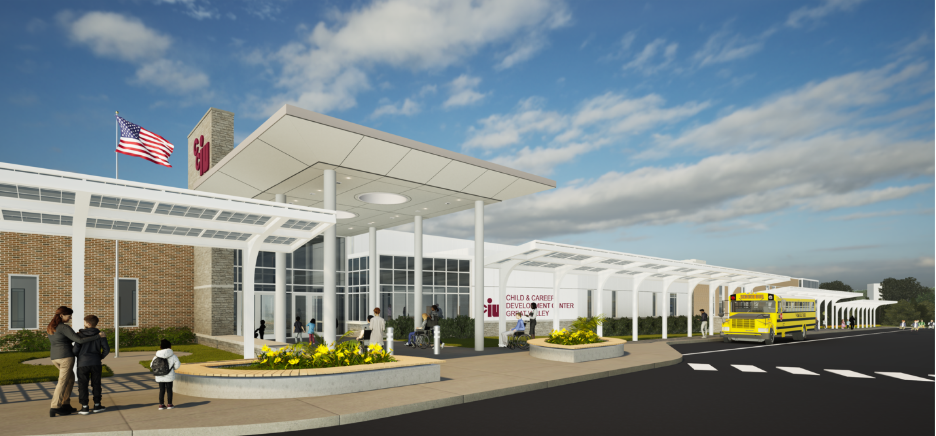
Development across the region remains strong as multifamily housing, mixed-use developments and educational facilities continue to move forward. In Malvern, construction is underway on the Chester County Intermediate Unit’s new Child and Career Development Center (CCDC) Great Valley campus, designed to better serve students with special needs across the county.
The project design team was led by Stephen Behrens, AIA, principal at Breslin Architects, who has deep experience across award-winning Pre-K through 12 and higher education architecture. That work, paired with input from peer facilities across the country, helped shape the building’s approach to universal accessibility.
Scheduled to open this fall, the approximately 90,000-square-foot campus will serve around 175 students. The design emphasizes intuitive wayfinding and a controlled sensory environment, incorporating color, texture, and distinct floor patterns to support navigation and spatial awareness for a wide range of users.


Photos: © Carol Feeley Photography
Construction underway on the Chester County Intermediate Unit’s new Child and Career Development Center (CCDC) Great Valley campus
For facilities serving students with varied needs, design decisions carry added weight. Beyond accessibility and comfort, there is a clear responsibility to ensure a high level of safety and resilience.
That becomes especially important when it comes to fire safety.
For project teams, this reinforces the need for a layered approach. Active systems such as sprinklers and alarms are essential and required. But they depend on proper installation, ongoing maintenance and a reliable water supply, as well as human response. Passive systems operate differently. They’re always there. They remain in place and perform without activation.
That distinction matters in schools and specialized learning environments.
CMU is noncombustible and inherently meets fire-resistance requirements without additional measures, providing a continuous layer of protection that is especially important in these settings.
“Many of these students would require help in an emergency situation,” Behrens said. “We’re looking for fire-resistive construction, and block helps with that tremendously,” adding “CMU is something we always bring to the table for a project like this.”
Given the center’s proximity to a major highway, acoustic performance was also key.
“We were very conscious of the need to control acoustics, both from the outside-in, as well as one space to another to create a sense of calm throughout,” Behrens said.
Local manufacturing also plays a role in the project’s delivery. Fizzano Brothers Concrete Products, based in Malvern, is supplying concrete masonry units (CMU) produced with raw materials sourced mere miles from the jobsite.
Having a local manufacturer has practical advantages during construction. “With Fizzano being right down the road, the masons have field support if anything comes up,” Behrens said.
“We’re proud to contribute to a project like this,” said Rocky Fizzano, president of Fizzano Bros. Concrete Products. “Facilities like the CCDC Great Valley campus serve an important need, and it’s meaningful to know the materials we produce will be part of something that supports the community for years to come.”
Navigating all these considerations benefits from early coordination. Engaging technical expertise during the initial design phases can help align fire-resistance requirements with structural systems, acoustics, and constructability while reducing the likelihood of redesign later in the process.
In the Philadelphia region, the Block Design Collective (BDC) provides that type of early-stage support. Led in the Northeast by Chuck Rotondo, the BDC works with architects, engineers, developers and owners to evaluate masonry systems, review detailing and identify efficient paths to meet code requirements.
The group’s design assistance is offered at no cost and without obligation. Teams can engage early, explore options and make informed decisions before designs are finalized.
Projects like the CCDC Great Valley campus make clear what is at stake in how buildings are planned and constructed. Safety should operate in the background. When it is built into the structure itself, it allows students and staff to fully engage in learning.
For more information, contact Chuck Rotondo at crotondo@blockdesign.org or visit blockdesign.org.
About the Author
Chuck Rotondo is the Northeast Regional Director for the Concrete Masonry Checkoff’s Block Design Collective. In his role, he leads a team of design experts dedicated to supporting architects and engineers with tailored solutions.