Tino is the Technical Director of the Central Region for the Concrete Masonry Checkoff’s Block Design Collective. In his role, he leads a team of design experts dedicated to supporting architects and engineers with tailored solutions.
Where Grit Meets Design: The Power of Concrete Masonry in Chicago
Few cities test a building’s limits like Chicago. From frigid winters and scorching summers to lake-driven winds and dense urban conditions, it’s a proving ground for materials. That’s why architects, developers, and builders here need solutions that not only perform under today’s intense pressures but also contribute to a more sustainable and resilient future.
Concrete masonry units (CMU) meet that challenge with a rare combination of toughness and environmental intelligence. It’s a material built for Chicago’s climate with the same endurance and fortitude as its residents.
Designed for Chicago’s Demands
Chicago’s buildings face some of the nation’s harshest conditions, including intense freeze-thaw cycles, wind-driven rain, heavy loads and constant urban wear. Concrete masonry stands up to them all.
With built-in durability and low maintenance, CMU delivers resilience where it matters most:
- Fire – Inherently non-combustible, CMU can provide 2- to 4-hour fire ratings based on construction, which gives occupants and first responders valuable time.
- Flood – CMU retains its structural integrity and does not require replacing or degrade when exposed to normal flooding conditions.
- Wind – Reinforced CMU withstands high winds and debris impact, a key benefit in the Windy City.
- Impact – Dense and strong, CMU is ideal for blast and accidental impact zones.
- Pests – CMU is pest resistant.
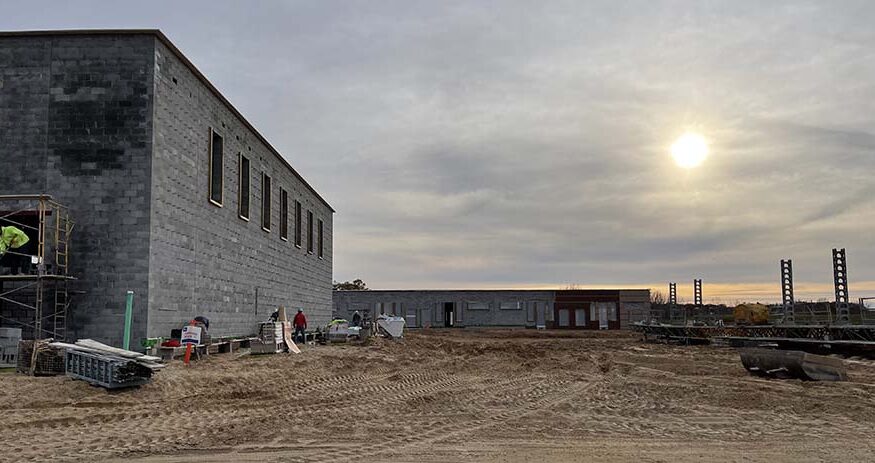
One example of a new building that was built using concrete masonry specifically for its resilient properties is the South Shore Beach House. Completed for the Chicago Park District, the 2,500 square-foot structure was the winner of the Excellence in Masonry Award for Structural Masonry.
It was constructed primarily of ground-face polished CMU, which are light-colored and reflective, durable, cleanable and graffiti-resistant. Wide open pathway slots in the wall reflect Lake Michigan on its side walls to expand the view for visitors.
“Obviously, being on the shore of the lake [Lake Michigan], it’s going to get a lot of weather, and being load-bearing masonry, it can handle it,” said Judge Diane Travis, Architectural Consultant at the Rocky Mountain Masonry Institute. “This is kind of the immovable object in the seashore … the sand may move; this is going to stay.”


Caption: South Shore Beach House designed and built by HPZS Architects, II In One Contractors and Northfield Block]
Sustainable From Start to Finish
CMU isn’t just strong. It’s smart. Manufactured with dry-cast methods, CMU uses less water and cement than other concrete production methods, thus reducing carbon emissions from the start.
But CMU doesn’t stop at low impact. Thanks to its unique manufacturing process, concrete block sequesters carbon dioxide. at an accelerated rate compared with other types of concrete. This process continues over the life of the building, locking in carbon and reducing its total environmental footprint.
Add in CMU’s longevity and that means fewer repairs, less waste, and better outcomes for the environment and the bottom line.
Passive Energy Performance That Pays Off
In a city where temperature swings are intense and energy efficiency is non-negotiable, CMU helps buffer interiors naturally. Its thermal mass captures heat and gradually releases it to moderate indoor temperatures, reduces HVAC loads and improves comfort throughout the year.
Wall assemblies can be optimized to meet or exceed R-10, supporting compliance with Chicago’s progressive energy codes while enabling LEED certification and long-term energy savings.
A Material That Reflects Chicago’s Spirit
Concrete masonry isn’t a trend. It’s a trusted tool in the hands of architects and engineers who build for endurance. It’s regionally produced, readily available, and offers a variety of finish options for design versatility without sacrificing performance.
Frank Lloyd Wright, whose work helped define the city’s architectural legacy, put it best:
“Form and function should be one, joined in a spiritual union.” CMU embodies that philosophy, bringing performance and design into alignment for a smarter, more resilient built environment. It’s a material that stands up to the elements, supports climate goals, and brings strength and sustainability into seamless union.
Get Free Project Support
Interested in seeing how your next project can benefit from concrete masonry? The Block Design Collective offers free project support to architects, engineers and developers. For more information, contact Tino Kalayil at tkalayil@blockdesign.org or visit blockdesign.org.