By Chuck Rotondo, Northeast Regional Director, Block Design Collective
Traditionally, affordability in construction has largely meant one thing: first cost. If a project penciled out on bid day and stayed within budget, it was considered a success.
That definition is getting harder to defend, particularly in markets like Greater Boston.
Construction costs here already run about 18% higher than in markets like Chicago, Seattle and Washington, D.C., according to market analysis from Cresa. When the starting price of building is that elevated, design decisions carry a ripple effect that extends well beyond construction.
Energy prices fluctuate. Materials and labor remain unpredictable. Severe weather events are becoming more common. Taken together, they reinforce a reality owners know firsthand: the real cost of a building often emerges long after construction crews leave.
The lowest bid is often enticing, but the real question is how reliably a building will perform over an extended period.
Affordability is a life-cycle equation
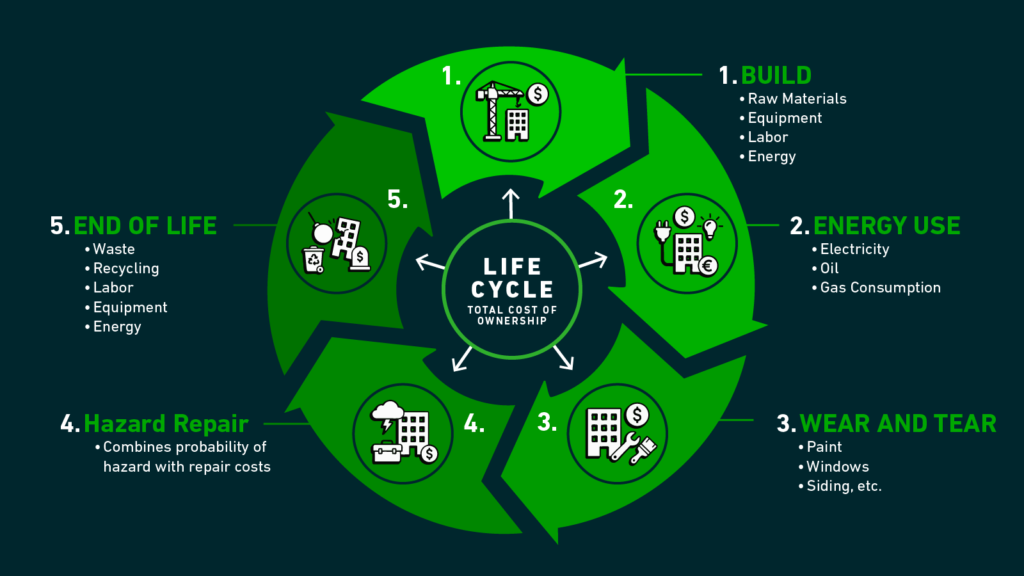
Looking at a building across its life reveals a much larger financial picture. The upfront price is only one piece.
- Build
Most conversations begin here: raw materials, labor, equipment and energy used during construction. Important, but only the first layer of the cost picture. - Energy use
Operating energy adds up quickly. Electricity, heating and cooling become recurring expenses that can dwarf the initial construction cost. - Wear and tear
Every building needs upkeep. Exterior finishes, roofing systems and windows all have replacement cycles that accumulate over time. - Hazard repair
In my experience, risk exposure can be easy to overlook. Storm damage, fire, water intrusion or impact events can trigger costly repairs. Operational downtime only compounds the problem.
End of life
Eventually, every building reaches a point where it must be renovated, deconstructed or replaced. Demolition, hauling, recycling and disposal all carry costs that influence the economics of the original design decisions.
Why it matters in practice
Few building types illustrate these realities more vividly than public schools and other civic facilities. Districts are responsible for buildings expected to serve communities for generations, often with tight public budgets and little tolerance for maintenance disruptions.
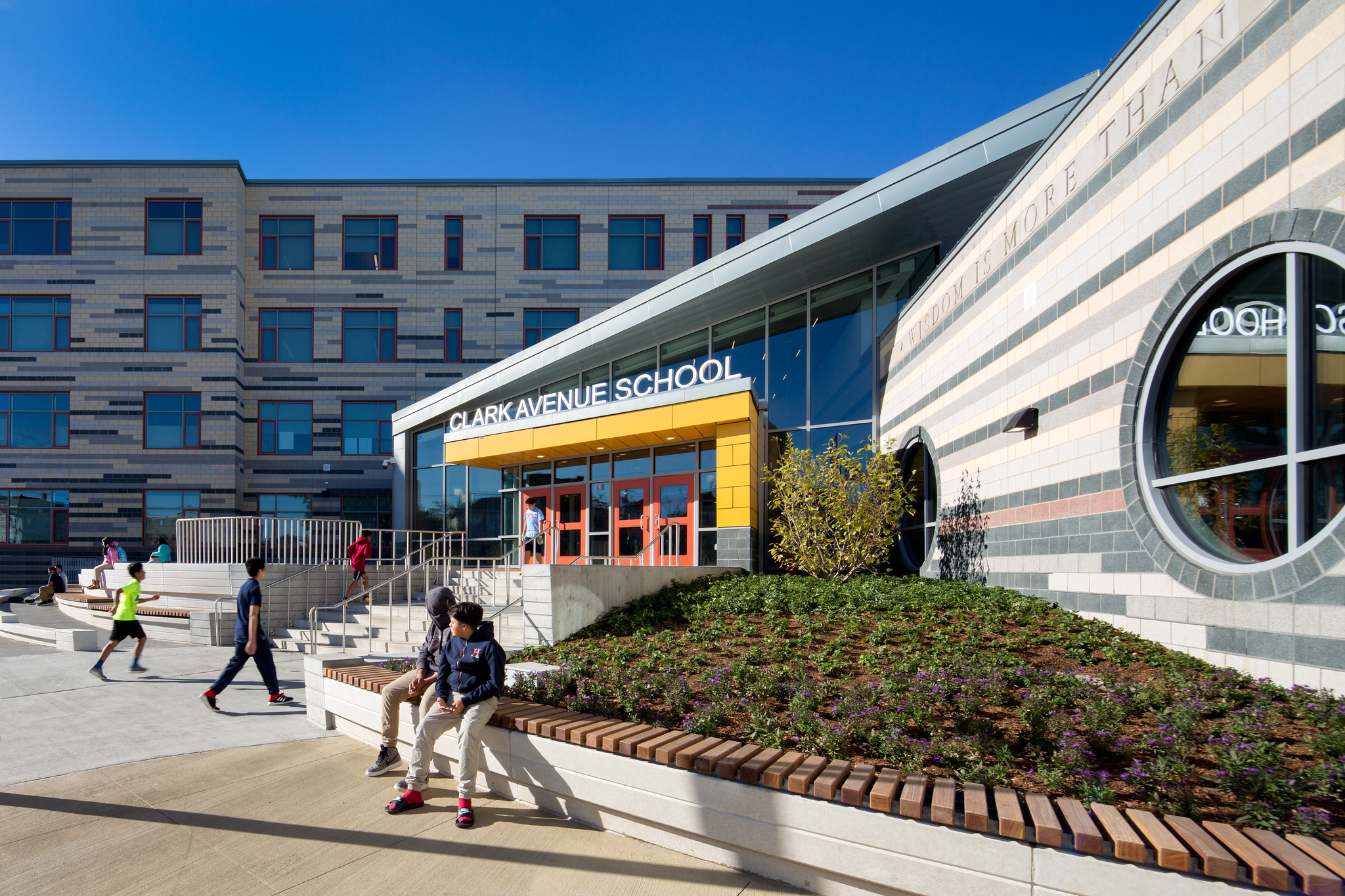
Just outside Boston, Clark Avenue Middle School in Chelsea shows how these decisions play out. The five-story, 115,000-square-foot school replaced a century-old facility while preserving the site’s civic role. Construction occurred in two phases so classes could remain in session, placing a premium on durable materials.
Designed by HMFH Architects, the building serves roughly 670 students and includes classrooms, labs, art studios and community spaces.
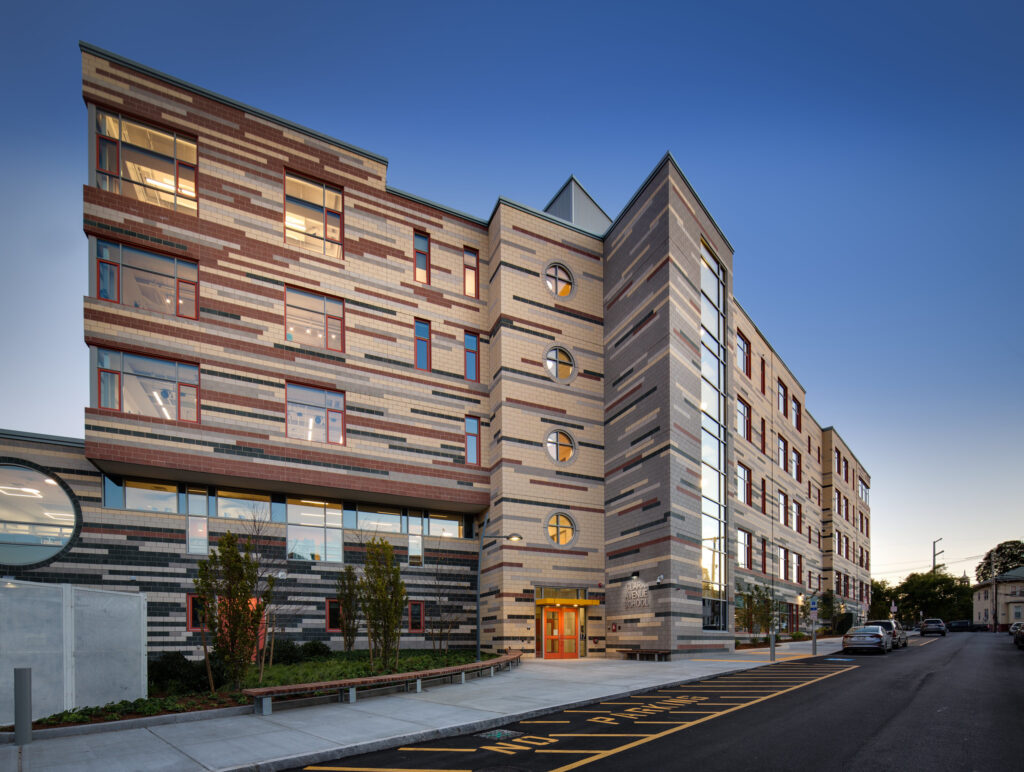
Photo courtesy ©Ed Wonsek
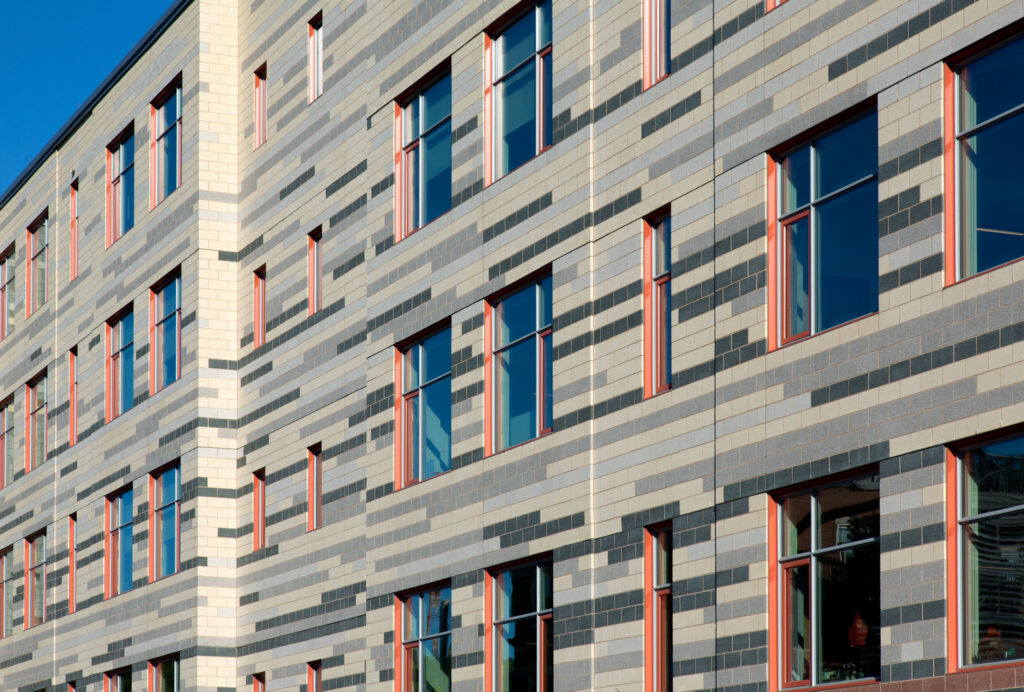
Photo courtesy ©Ed Wonsek
Architectural concrete masonry defines much of the exterior and contributes to interior acoustic comfort. Reinforced masonry walls provide inherent fire resistance and thermal mass while helping reduce maintenance demands in a heavily used school. The project achieved LEED Silver certification and received both Learning by Design and AGC Massachusetts Build New England awards.
It’s not about spending more. It’s about losing less.
Durability doesn’t always mean higher initial costs. In many cases, materials that perform multiple functions — structural support, fire resistance, thermal performance and finish — can simplify assemblies while improving building performance.
Concrete masonry is one example. Modular construction efficiencies can reduce waste and labor requirements. Regional manufacturing helps stabilize supply and pricing. Over time, masonry’s thermal mass supports energy performance, while natural fire and impact resistance can reduce maintenance and repair demands.
Those characteristics matter when buildings are expected to serve communities well into the future.
Keeping concrete masonry competitive from the start
Designing for durability does not have to mean sacrificing cost competitiveness. With efficient detailing and streamlined wall assemblies, project teams can often reduce complexity while improving performance.
That’s where the Block Design Collective (BDC) adds real value. The BDC works with design teams to identify material efficiencies, assist with code compliance and simplify masonry wall assemblies early in design. These services are provided at no cost and with no obligation.
In markets like Boston, where construction costs are already among the highest in the country, the real challenge isn’t just managing the bid price. It’s making decisions today that prevent avoidable costs tomorrow.
For more information, contact Chuck Rotondo at crotondo@blockdesign.org or visit blockdesign.org.
About the Author
Chuck Rotondo is the Northeast Regional Director for the Concrete Masonry Checkoff’s Block Design Collective. In his role, he leads a team of design experts dedicated to supporting architects and engineers with tailored solutions.