
By Danielle Mokris, Technical Director of the Southeast Region for the Block Design Collective
Atlanta’s Next Generation of Schools Must Be Built for Safety From the Ground Up
Across the country, conversations about school safety often focus on policies, surveillance technology and emergency procedures. Those measures matter. But one of the most important safety decisions happens much earlier — when architects and school districts choose what the building itself will be made of.
That conversation is increasingly relevant in metro Atlanta. Atlanta Public Schools, built for about 70,000 students but enrolling closer to 50,000, is repurposing some facilities while investing in upgrades. Fulton County Schools is advancing a major capital program, while Gwinnett County Public Schools continues expanding to serve more than 180,000 students.
When communities like these are spending hundreds of millions of dollars on schools designed to last generations, the materials chosen today will shape safety, durability and operating costs for decades. One building material continues to stand out in school construction — concrete masonry.
Concrete masonry units (CMU), commonly known as concrete block, have long been used in schools for a simple reason: they quietly deliver multiple layers of protection in a single system. Reinforced masonry walls provide resistance to fire, severe weather, ballistic threats, impacts and daily wear, helping create learning environments that are both durable and safe.
“For communities investing in a new school, the question shouldn’t just be how it looks on day one,” said James Cain, president of the Southeast Concrete Masonry Association. “It’s how that building performs for the next 50 or 100 years.”
Designed for the Realities Schools Face
Schools face unique challenges. They must accommodate thousands of people every day, withstand constant activity and remain operational even during emergencies. Concrete masonry helps address those demands in several ways.
- Fire safety: CMU walls can withstand fire for hours and often confine flames to their origin point, giving students and staff valuable time to evacuate.
- Storm resilience: When properly engineered, reinforced CMU assemblies can withstand extreme winds and debris impacts, allowing areas such as gyms or cafeterias to be designed as hardened shelters.
- Ballistic protection: It’s an unfortunate reality in school safety planning today, but concrete masonry walls can help resist ballistic threats and provide an additional layer of protection in areas designated for shelter-in-place or secure corridors.
Concrete masonry also contributes to quieter learning environments by reducing sound transfer between classrooms and common spaces. The material’s density helps limit noise in busy areas like corridors and cafeterias, supporting better focus for students and teachers.
Empower College and Career Center in Northeast Georgia
A recent project in northeast Georgia illustrates how these principles are being applied in modern school design.
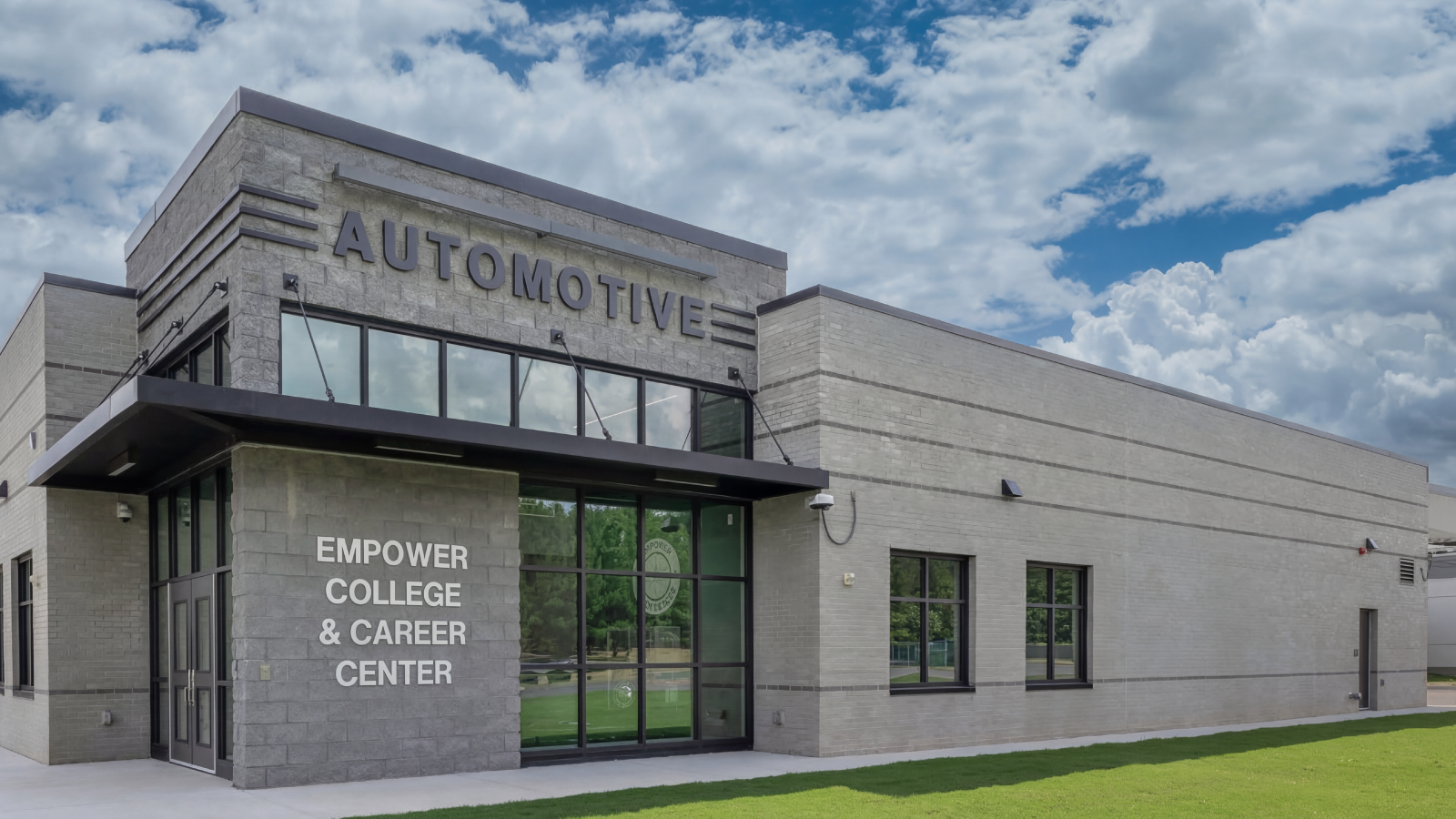
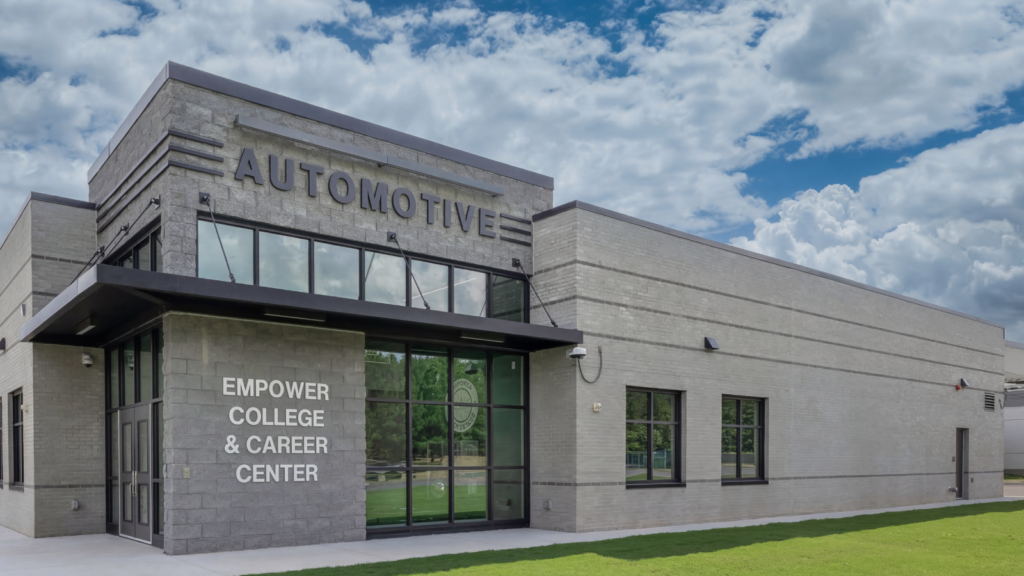
Empower College & Career Center in Jackson County, constructed by Gainesville-based Carroll Daniel Construction with product supplied by Oldcastle, was designed as an interactive learning environment where students can get hands on automotive repair training. The facility combines classrooms, technical labs and collaborative learning spaces that connect education directly to workforce development.
Because of the equipment and intensive training happening within the building, it required the structural strength and longevity of a CMU design. As a result, lightweight CMU was used for the building’s structural system, providing durability and resilience while supporting the modern design of the campus.
A Material Built for Heavy Use
Any school administrator can attest that educational buildings take a beating. From crowded hallways and moving equipment to daily maintenance challenges, schools require materials that can handle decades of wear. Unlike lighter wall systems that dent or require frequent repairs, masonry walls maintain their structural integrity and appearance with minimal upkeep.
That durability translates into long-term value for taxpayers. Concrete masonry’s thermal mass also helps stabilize indoor temperatures, allowing HVAC systems to operate more efficiently and lowering energy use over time. For districts managing tight budgets, those life-cycle savings can be as important as the safety benefits.
A Modern Design Tool
Despite its reputation as a purely utilitarian material, today’s concrete masonry offers architects extensive design flexibility.
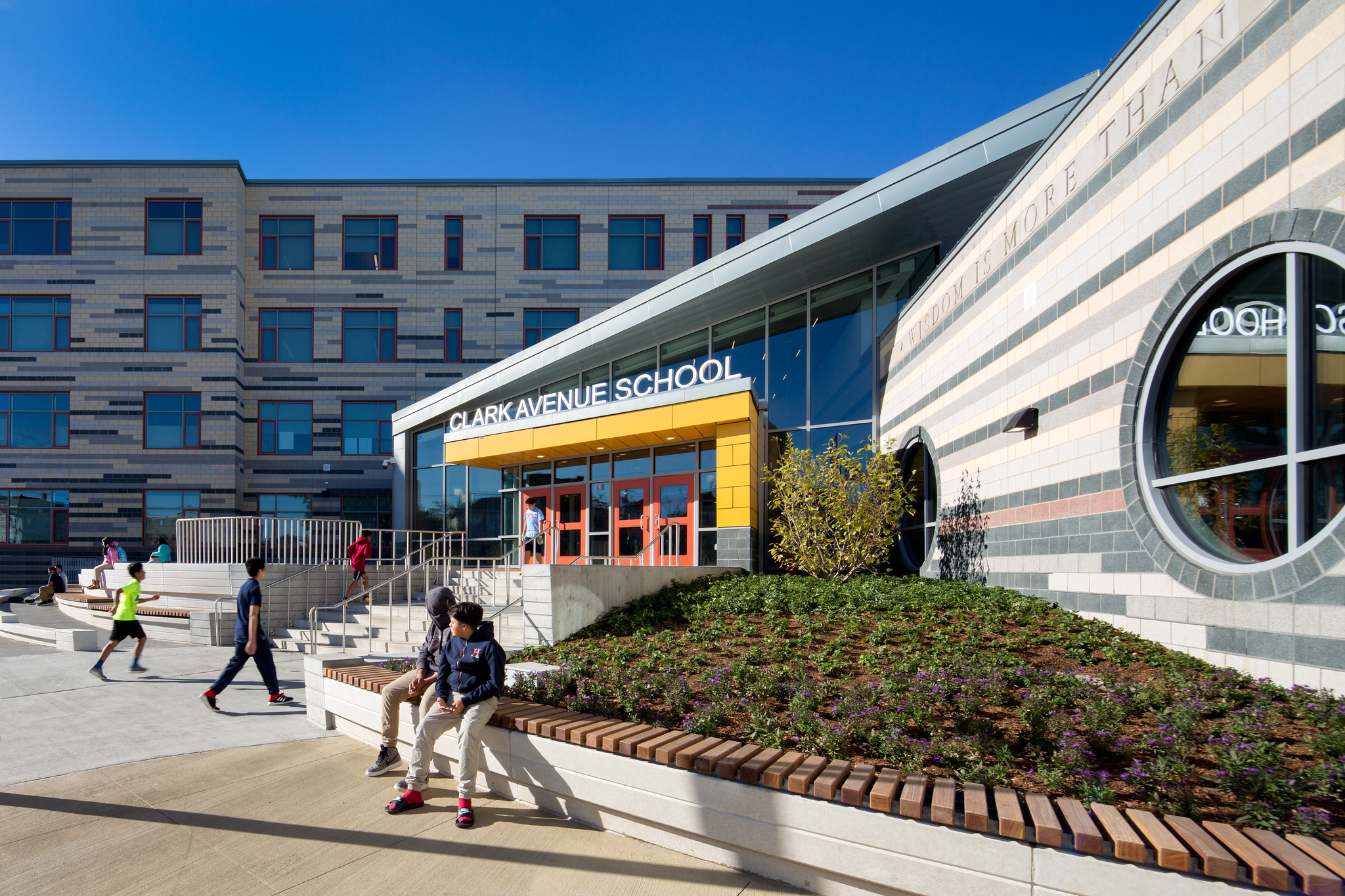
Manufacturers now produce block in a wide range of colors, textures and finishes, from polished or burnished surfaces to stone-like veneers, allowing schools to achieve modern aesthetics while maintaining the performance benefits of masonry. That versatility is particularly important in growing cities like Atlanta, where schools often serve as community anchors and civic landmarks.
Local Expertise for Safer School Design
As school districts across Georgia plan new campuses and modernize aging facilities, early collaboration between architects, engineers and material experts can significantly improve project outcomes.
The Block Design Collective provides free technical design assistance to architects, engineers and developers exploring the use of concrete masonry. From structural strategies to aesthetic options and cost comparisons, the team works alongside project designers to help integrate masonry solutions effectively.
“Too often, materials decisions happen late in the process,” Cain said. “When design teams engage early, they can unlock solutions that make buildings safer, more resilient and more cost-effective.”
For Atlanta’s next generation of schools, that kind of collaboration may prove critical.
Because when it comes to protecting students, teachers and the communities around them, safety shouldn’t be an afterthought. It should be built into the walls.
Interested in Free Project Support for CMU?
Visit the Block Design Collective at blockdesign.org or contact Danielle Mokris at dmorkis@blockdesign.org.
Danielle Mokris is the Technical Director of the Southeast Region for the Block Design Collective. In her role, she leads a team of design experts dedicated to supporting architects and engineers with tailored solutions.