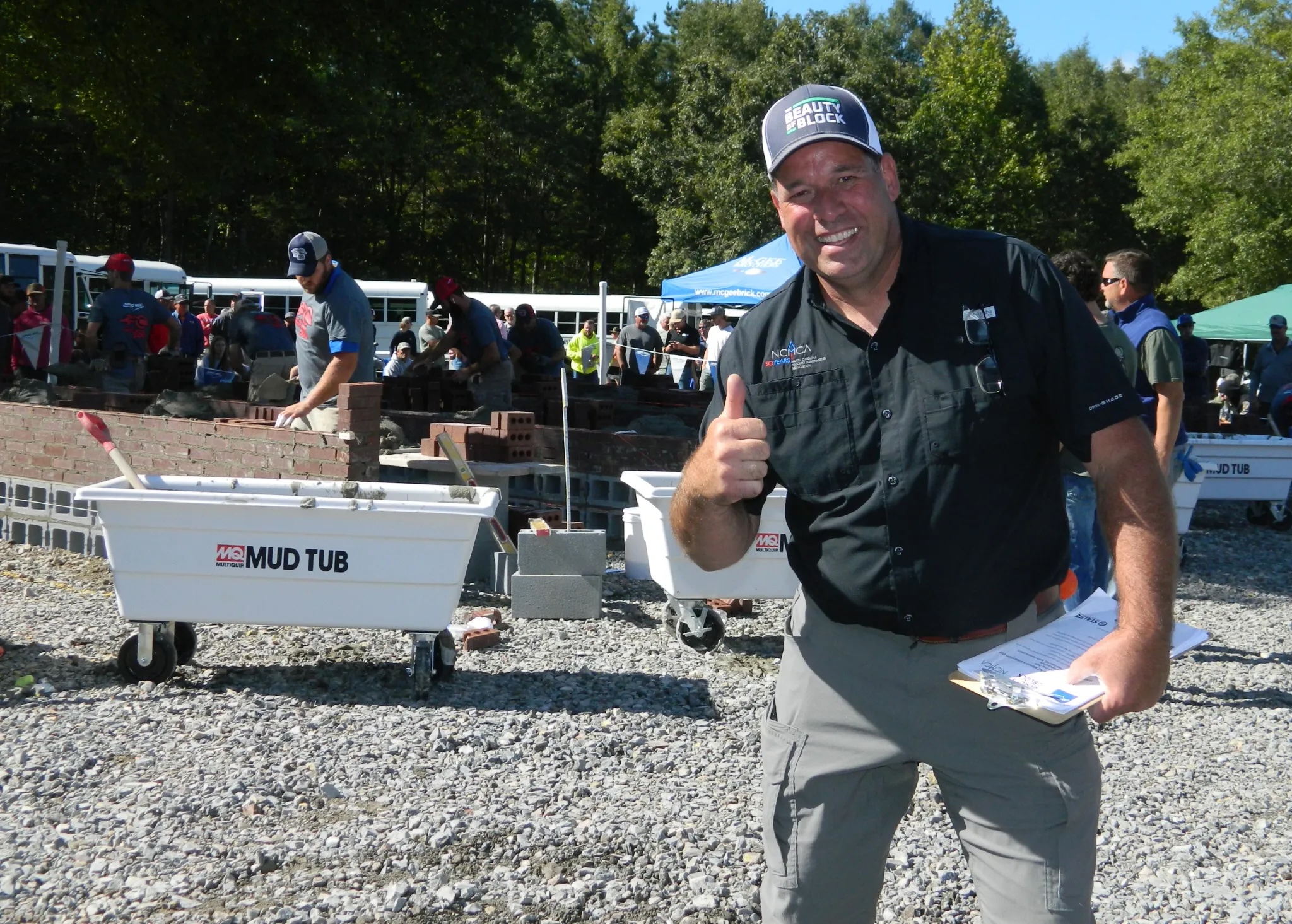
Ryan Shaver did not grow up planning a career in masonry. In fact, he hated school. What changed everything was a high school masonry class in 1989, a chance decision that set him on a path that would shape not only his career, but the many lives he has impacted across the masonry industry.
“I took the class and loved it,” Shaver said. “No one in my family was in construction, but it gave me a direction.”
That direction led him to SkillsUSA, where competition taught him discipline and preparation. After losing his first regional contest, Shaver returned determined. One year later, he won at the regional and state levels and captured a national title in 1993.
“That loss opened my eyes,” he said. “I realized I needed to practice, listen and take this industry seriously.”
Those lessons followed him into the field, then into the classroom, and now into association leadership. Today, as executive director of the North Carolina Masonry Contractors Association (NCMCA), Shaver has spent decades working across every side of the industry as a contractor, educator, mentor and advocate.
That experience shaped the Junior Blocklayer program, a Checkoff-supported initiative designed to create hands-on energy around CMU, build future talent, and give producers and industry partners a turnkey way to activate locally.
“I wanted the industry to be able to use it, adapt it and truly make it their own,” Shaver said.
Junior Blocklayer was built to be hands-on, memorable and scalable. At its core, the program reflects Shaver’s belief that engagement starts with experience. By putting CMU directly into participants’ hands, Junior Blocklayer creates a tangible connection that resonates with students, educators and AEC professionals alike.
“When you put concrete masonry in someone’s hands, that’s when buy-in really starts,” Shaver said.
The program was designed to be flexible and repeatable, allowing producers and industry partners to co-brand and activate events in their own communities. From youth-focused competitions to hands-on experiences for architects, Junior Blocklayer gives the industry a practical way to create awareness while strengthening the next generation of the masonry and design industry.
For Shaver, the success of the program is tied directly to how adults show up. He believes the industry has spent too much time expecting young people to adapt, instead of meeting them where they are.
“We have to teach adults how to work with students,” he said. “Not the other way around.”
That mindset shapes how Junior Blocklayer events are run, from encouraging direct interaction to creating moments participants remember long after the event ends. Shaver emphasizes simple actions such as walking table to table, asking questions and building relationships that turn curiosity into long-term interest.
Through Checkoff support, Junior Blocklayer has become a scalable tool producers can use to invest in the future of the industry while reinforcing the value of concrete masonry at the local level. Shaver’s goal is to see the program continue expanding across regions, creating consistent touchpoints that build awareness and momentum year after year.
“I want to see this industry grow in ways we have never seen,” Shaver said. “If we get people excited and organized, the impact will last.”
From student outreach to producer engagement, Shaver’s influence is felt across the industry. He has worked on every side of the table as a contractor, educator, association leader and advocate, with a primary focus on connecting with and growing the next generation of decision-makers.
For Ryan Shaver, it all comes back to the same lesson he learned decades ago. Build relationships. Do the work. And never forget where you cut your teeth.