
Maximizing Partition Wall Efficiency with 6 Inch CMU
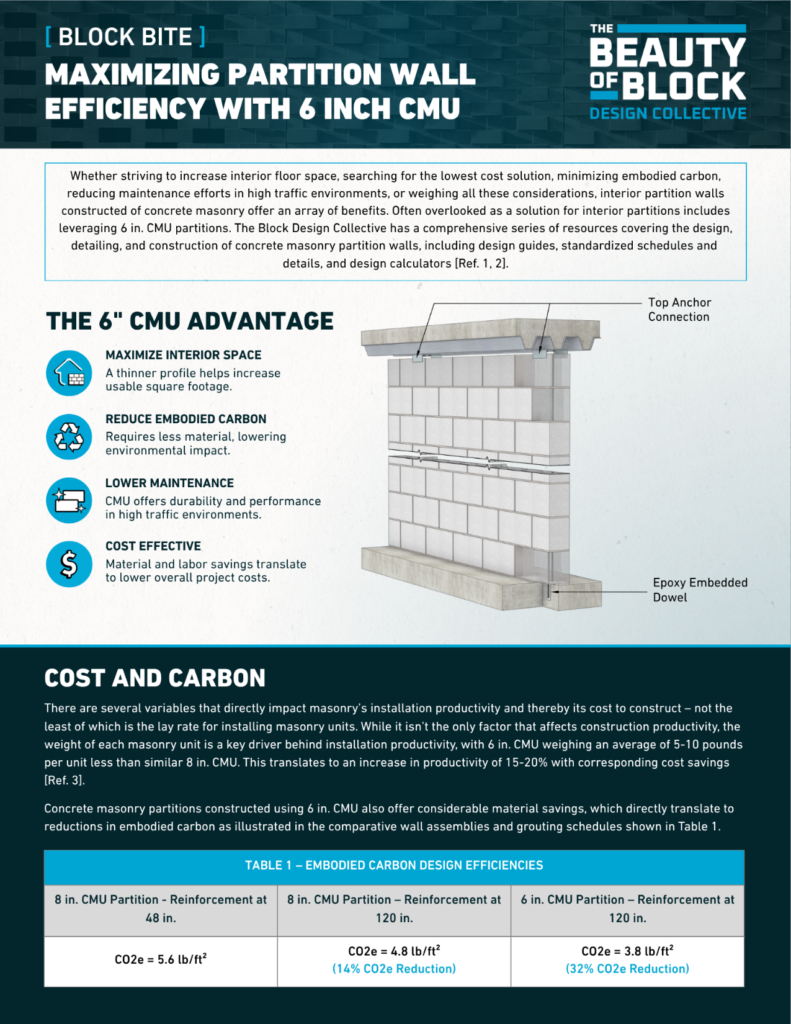
Whether striving to increase interior floor space, searching for the lowest cost solution, minimizing embodied carbon, reducing maintenance efforts in high traffic environments, or weighing all these considerations, interior partition walls constructed of concrete masonry offer an array of benefits. Often overlooked as a solution for interior partitions includes leveraging 6 in. CMU partitions. The Block Design Collective has a comprehensive series of resources covering the design, detailing, and construction of concrete masonry partition walls, including design guides, standardized schedules and
details, and design calculators [Ref. 1, 2].
General Design of Concrete Masonry Structures
This course explores the required concrete masonry design considerations to ensure a fully designed wall system that adheres to structural, fire, acoustic and energy design. The structural consideration will include the basis of design parameters, applications, design considerations, elemental design and limit states. While structural design is important, the course will discuss our ensuring fire, acoustical and energy compliance must also fit into the requirements of the wall system.
Specifying Fire Resistance Ratings for Concrete Masonry Construction
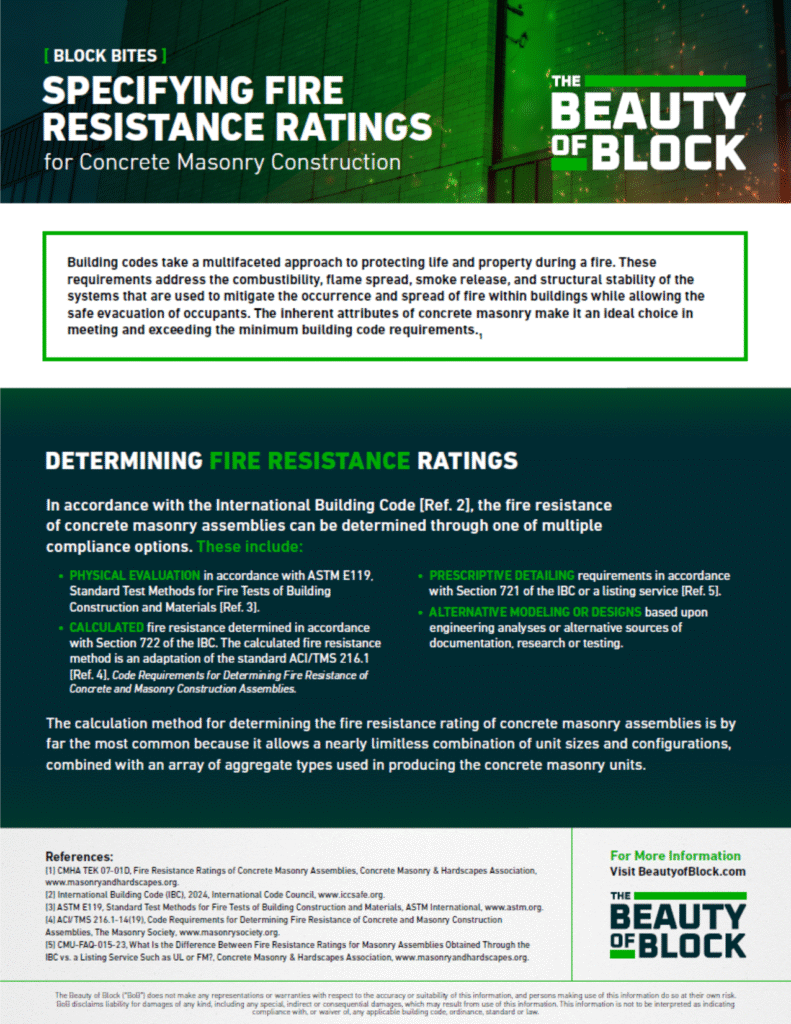
Building codes take a multifaceted approach to protecting life and property during a fire. These requirements address the combustibility, flame spread, smoke release, and structural stability of the systems that are used to mitigate the occurrence and spread of fire within buildings while allowing the safe evacuation of occupants. The inherent attributes of concrete masonry make it an ideal choice in meeting and exceeding the minimum building code requirements.
Core Performance: The 5 Ss of Concrete Masonry
Concrete masonry is commonly used for structural and architectural walls in buildings. Knowing the full extent of its applications and capabilities is important for designers to make resilient, sustainable, and cost-effective buildings.
The intent of this course is to provide a general overview of the properties and performance characteristics of concrete masonry walls. Attendees will learn about how to take advantage of and maximize the features and capabilities of concrete masonry units.
