
Typical CMU Lintel for Non-Structural Wall
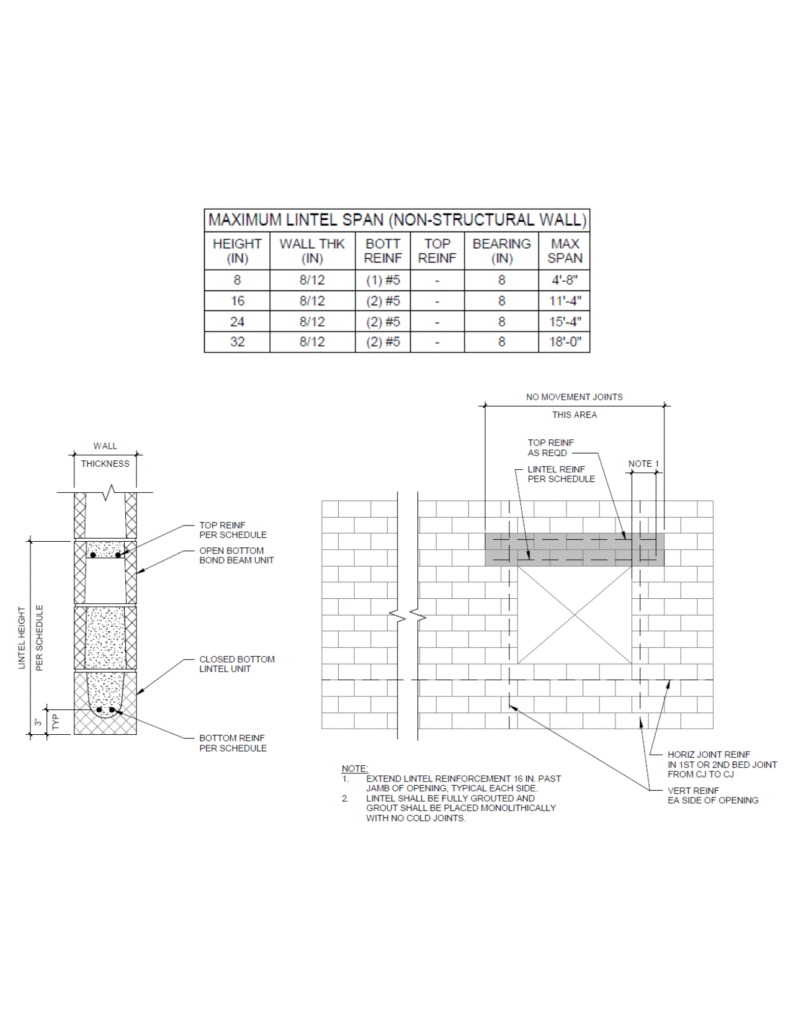
Lintel detail for typical CMU lintel for non-structural wall.
Guide for Delegated Design of Concrete Masonry
This Guide outlines Delegated Design as an integrated delivery method for
components or entire projects using concrete masonry construction, the roles
and responsibilities of each entity involved in the design and construction
process, items to consider or account for when considering engaging a Delegate
Engineer, and best practices and industry recommendations to review when
Delegated Design is an appropriate fit for an upcoming project.
Designer Checklist for Anchorage into Concrete Masonry Based on TMS 402/602-22
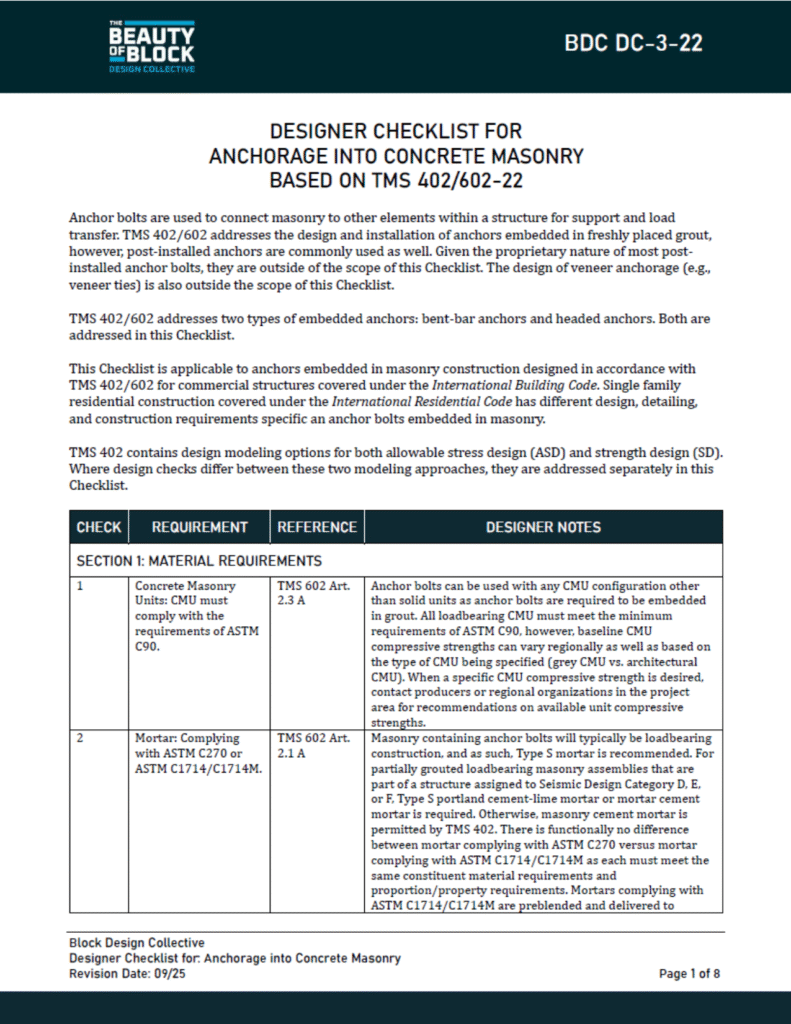
Anchor bolts are used to connect masonry to other elements within a structure for support and load transfer. TMS 402/602 addresses the design and installation of anchors embedded in freshly placed grout, however, post-installed anchors are commonly used as well. Given the proprietary nature of most post-installed anchor bolts, they are outside of the scope of this Checklist. The design of veneer anchorage (e.g., veneer ties) is also outside the scope of this Checklist.
TMS 402/602 addresses two types of embedded anchors: bent-bar anchors and headed anchors. Both are addressed in this Checklist.
This Checklist is applicable to anchors embedded in masonry construction designed in accordance with TMS 402/602 for commercial structures covered under the International Building Code. Single family residential construction covered under the International Residential Code has different design, detailing, and construction requirements specific an anchor bolts embedded in masonry.
TMS 402 contains design modeling options for both allowable stress design (ASD) and strength design (SD). Where design checks differ between these two modeling approaches, they are addressed separately in this Checklist.
Designer Checklist for Concrete Masonry Lintels Based on TMS 402/602-22
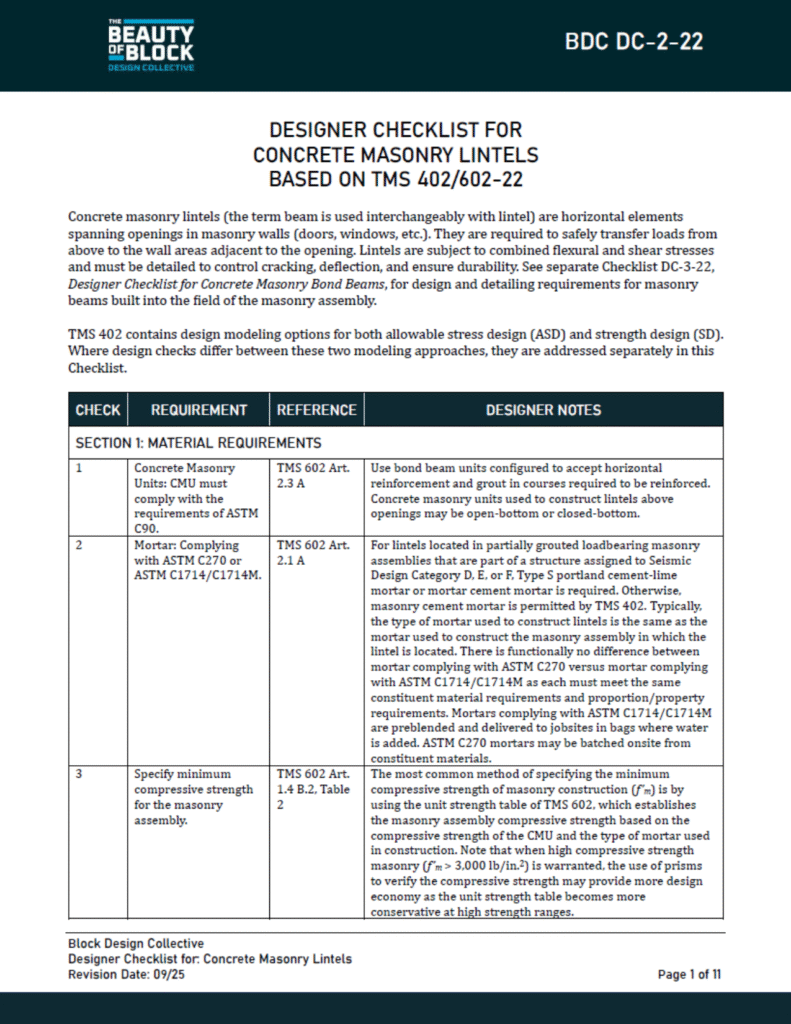
Concrete masonry lintels (the term beam is used interchangeably with lintel) are horizontal elements spanning openings in masonry walls (doors, windows, etc.). They are required to safely transfer loads from above to the wall areas adjacent to the opening. Lintels are subject to combined flexural and shear stresses and must be detailed to control cracking, deflection, and ensure durability. See separate Checklist DC-3-22, Designer Checklist for Concrete Masonry Bond Beams, for design and detailing requirements for masonry beams built into the field of the masonry assembly.
TMS 402 contains design modeling options for both allowable stress design (ASD) and strength design (SD). Where design checks differ between these two modeling approaches, they are addressed separately in this Checklist.
Masonry Compressive Strength Calculator
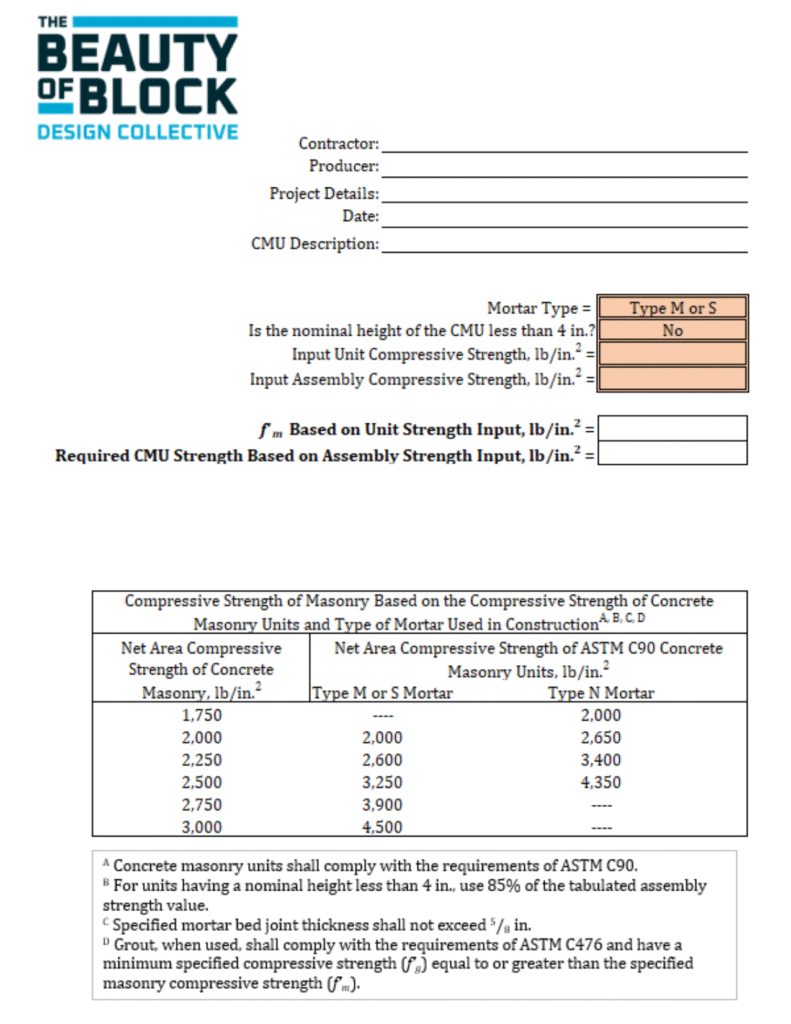
This calculator uses the unit strength table of TMS 602 (shown below) to determine the unit compressive strength required to achieve a user-specified masonry assembly compressive strength (f’m) – or determines the resulting assembly compressive strength (f’m) based on the user defined unit compressive strength. This calculator can be used with either the 2016 or 2022 editions of TMS 402/602.
Lap Splice Lengths (f’m = 2500 psi)
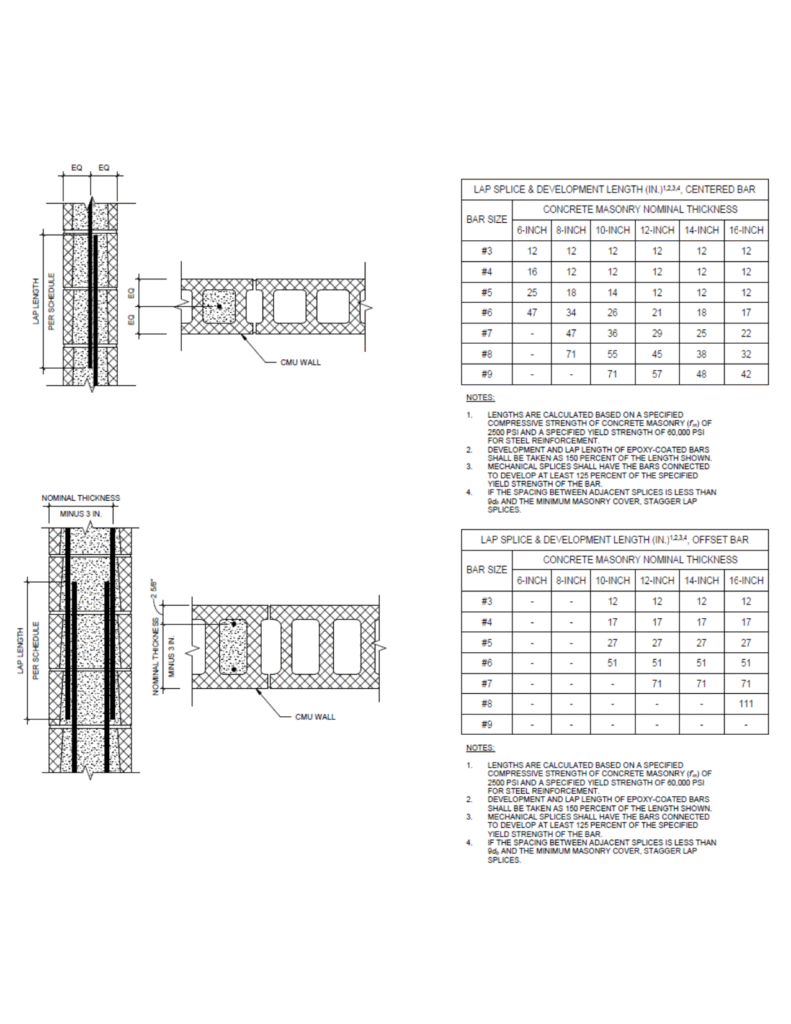
Reinforcement lap splice lengths detail for lap splice lengths (f’m = 2500 psi)
Lap Splice Lengths (f’m = 2000 psi)
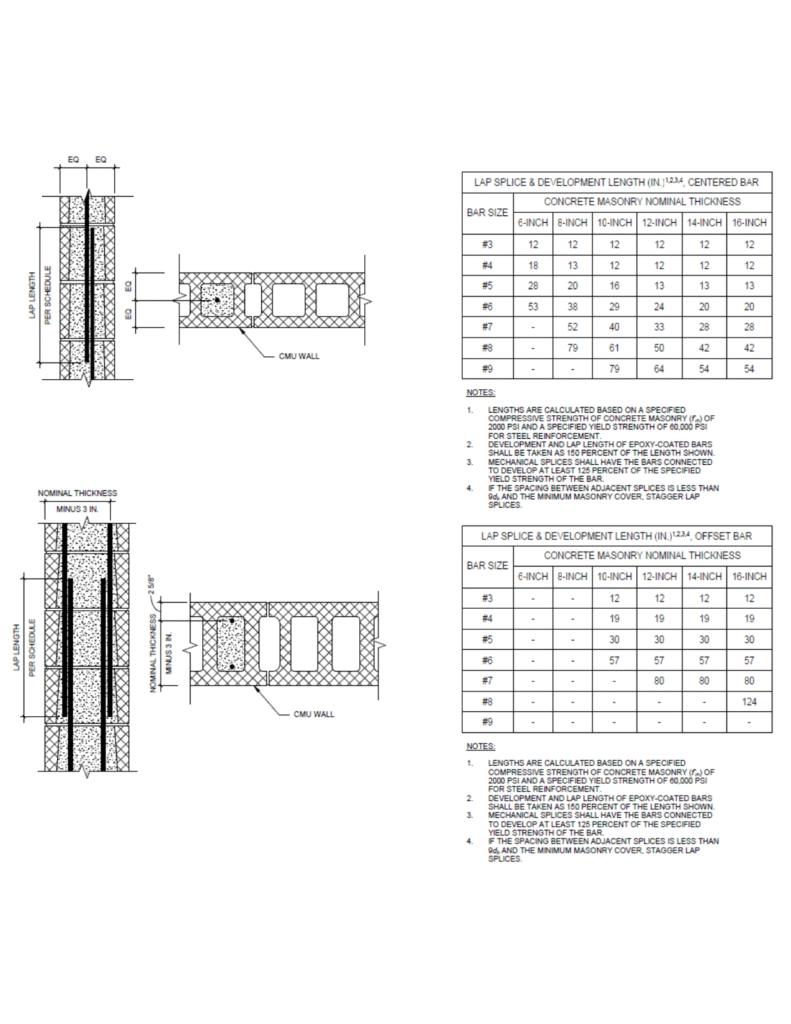
Reinforcement lap splice lengths detail for lap splice lengths (f’m = 2000 psi)
Ceramic Fiber Control Joint
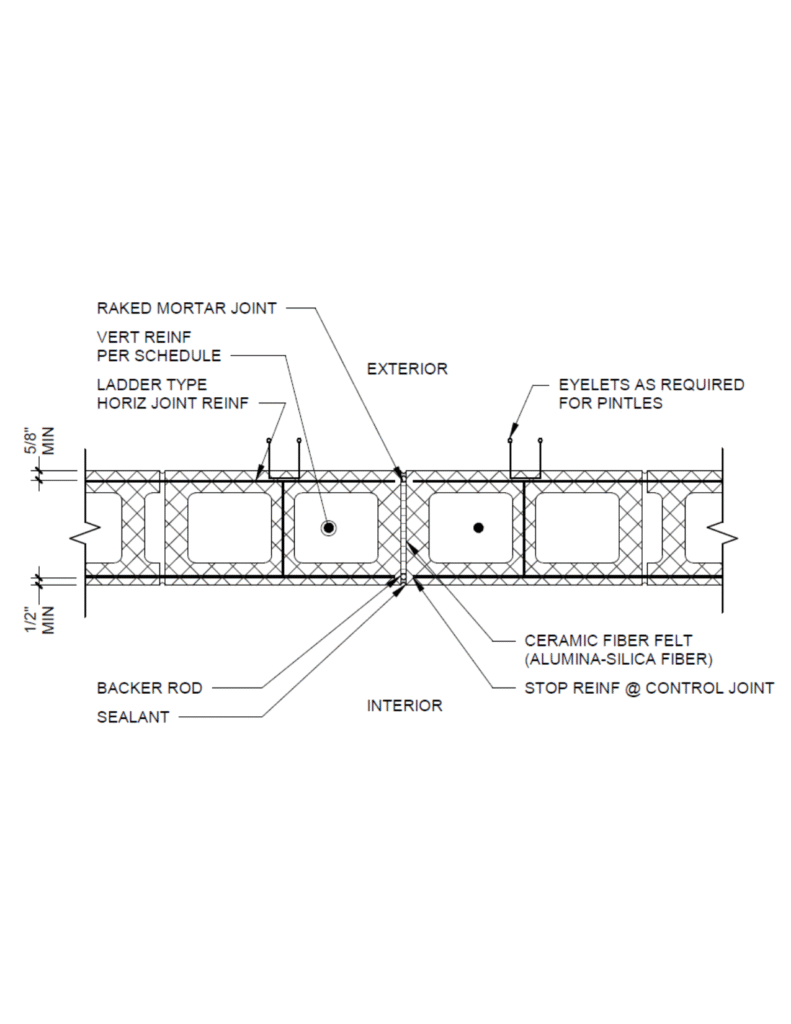
Control joint detail for ceramic fiber control joints.
Formed Paper Control Joint
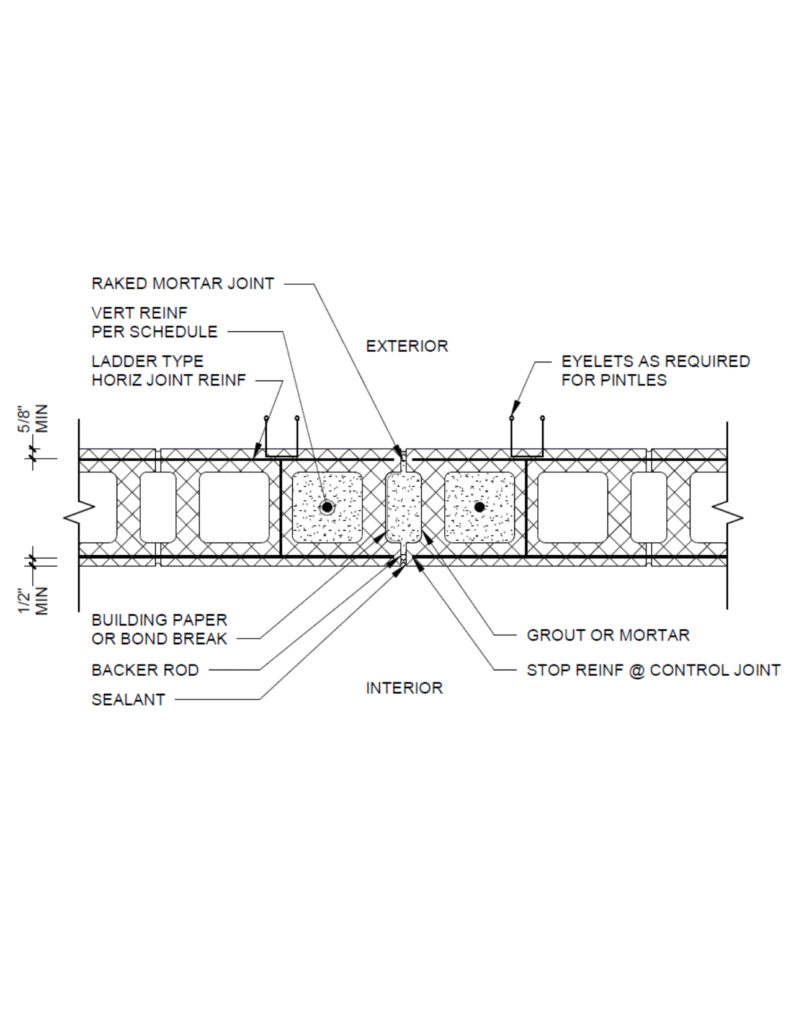
Control joint detail for formed paper control joints.
Gasket Control Joint
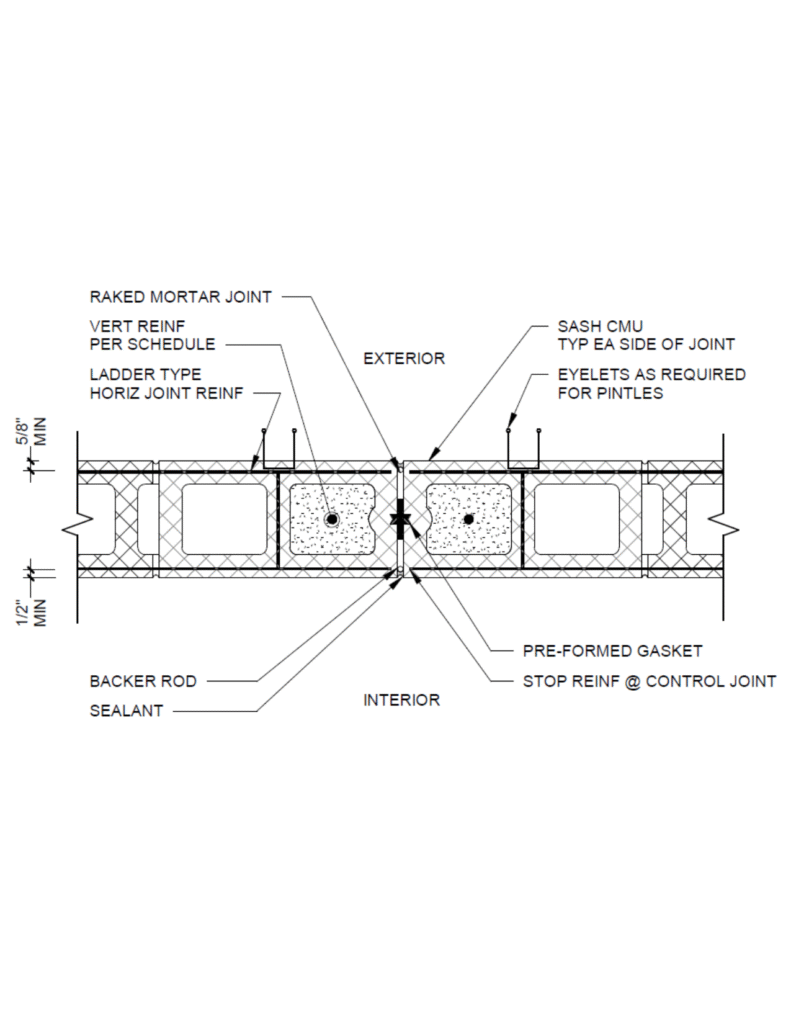
Control joint detail for gasketed control joints.