
Structural Base Detail (Concrete Brick)
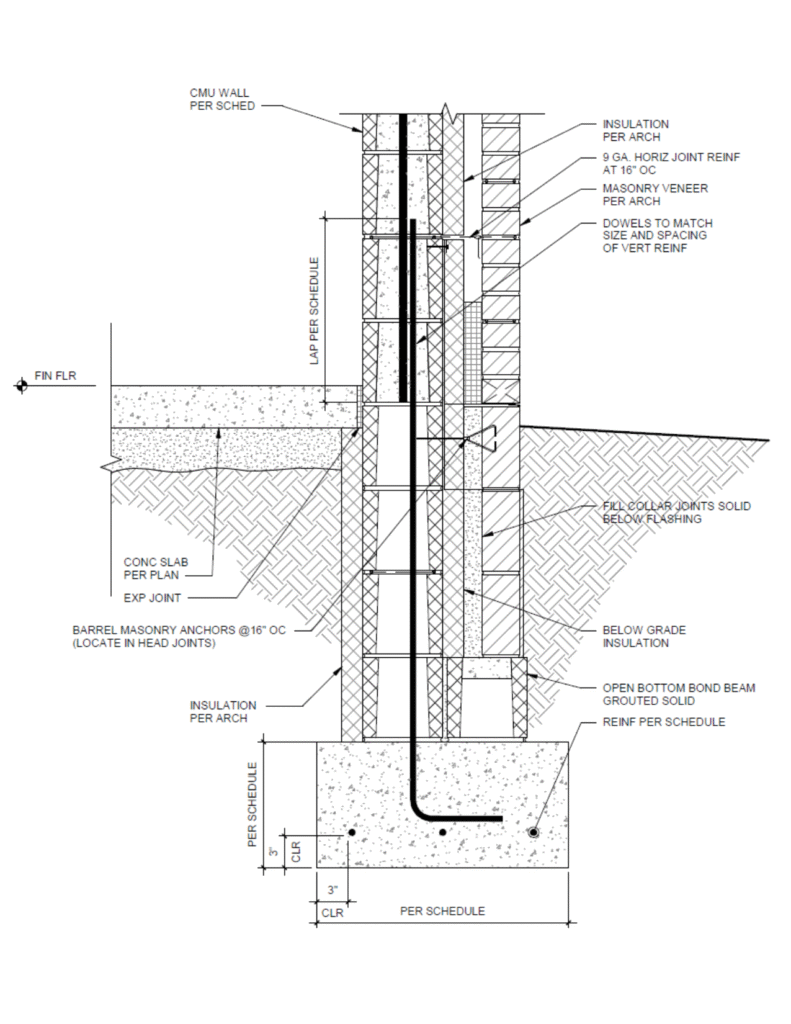
Base detail for structural base detail for concrete brick.
Structural Base Detail (CMU Veneer)
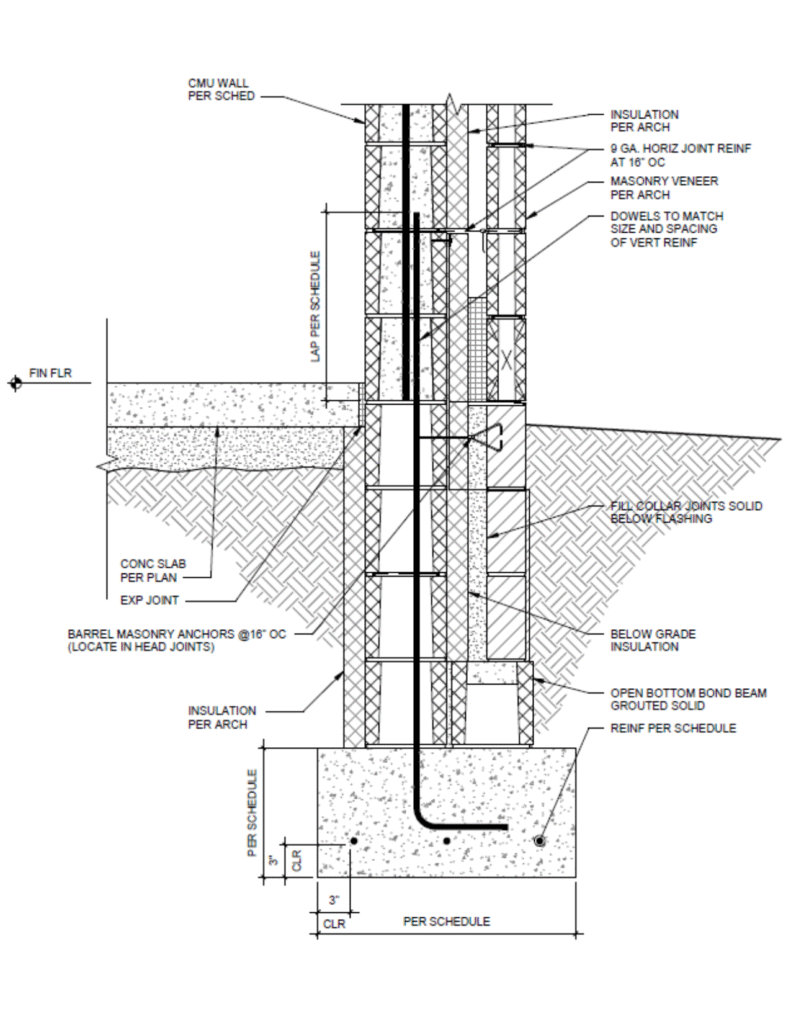
Base detail for structural base detail for CMU veneer.
Architectural Base Detail (Concrete Brick)
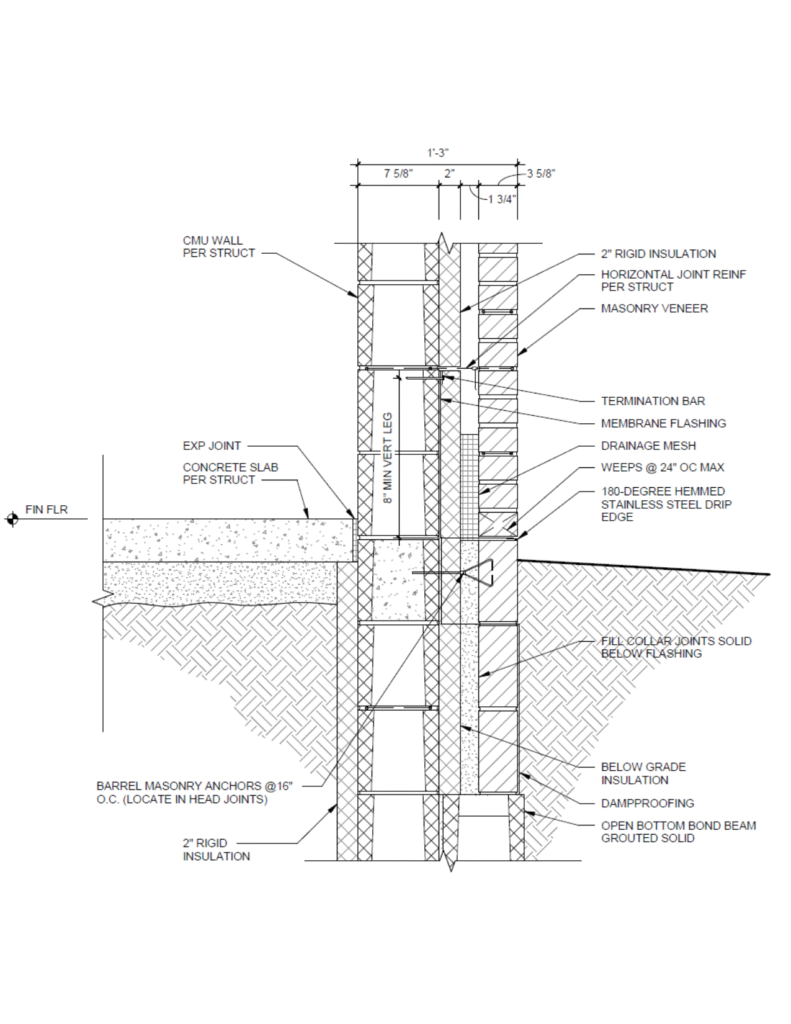
Base detail for architectural base detail for concrete brick.
Architectural Base Detail (CMU Veneer)
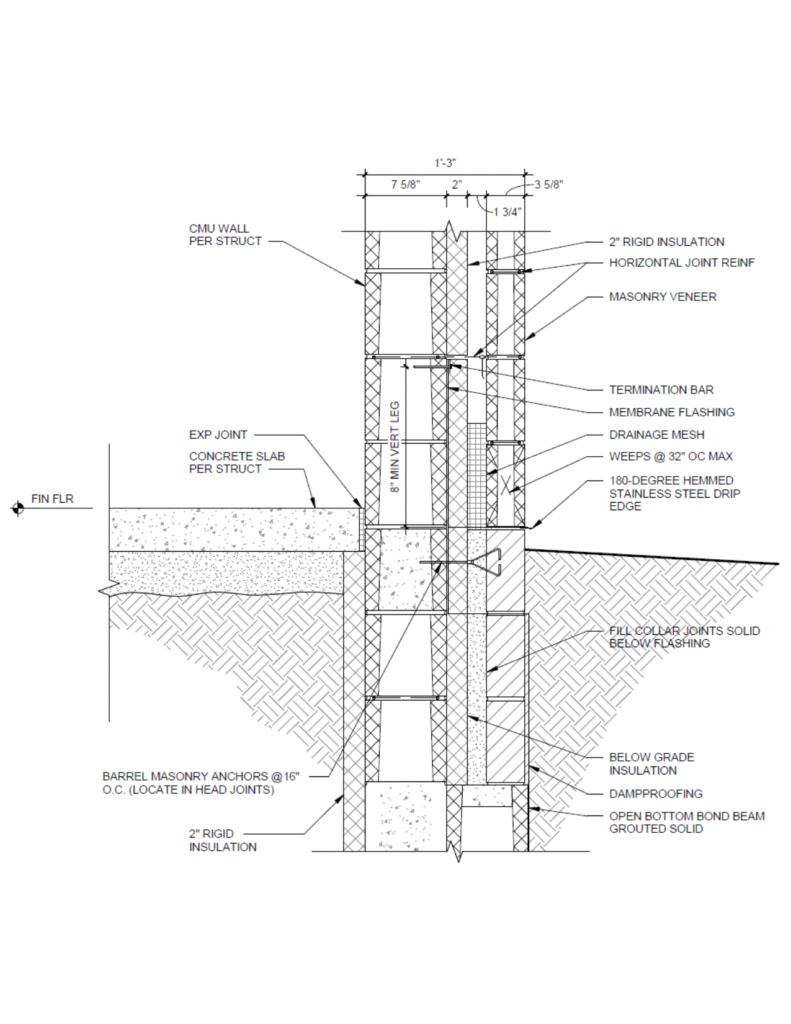
Base detail for architectural base detail for CMU veneer.
Section Properties and Wall Weights Calculator
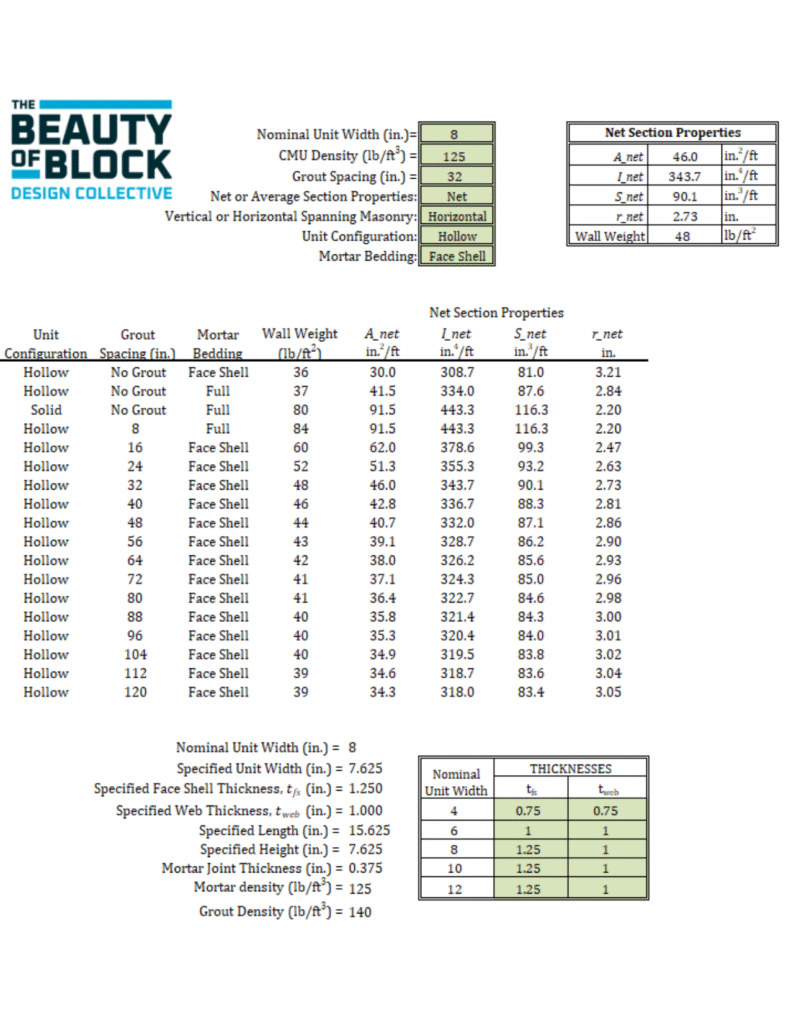
This calculator determines net and average cross-sectional properties based on user defined inputs. Net section properties represent the smallest cross-section of an assembly and are used for calculating assembly strength. Average section properties represent the average cross-section of an assembly and are used for calculating assembly stiffness. This calculator determines the net cross-sectional properties through a plane concurrent with a mortar joint while average section properties are determined through a plane concurrent with the mid-height or mid-length of a unit in the assembly.
Lap Splice & Development Length Calculator
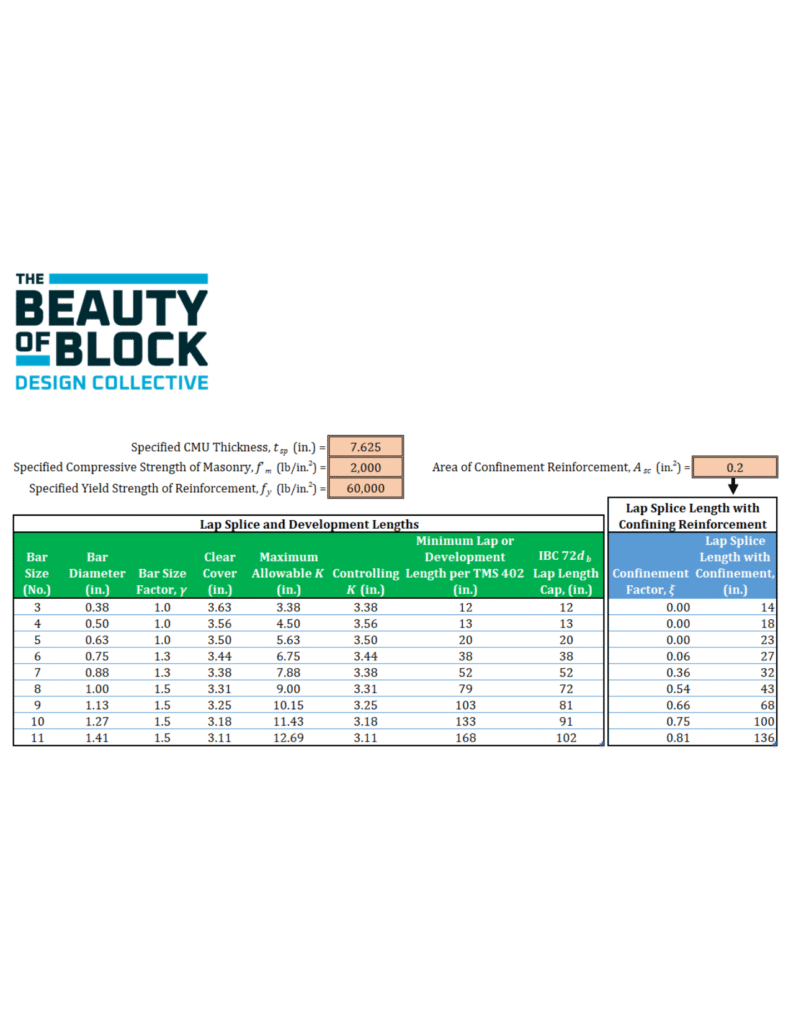
This calculator is based on the provisions of TMS 402/602-16 and TMS 402/602-22, Building Code Requirements and Specification for Masonry Structures. As there is no functional difference between the requirements of these two editions of the masonry design standard pertaining to the determination of minimum lap and development lengths, either edition is applicable.
Section 042200 Concrete Unit Masonry
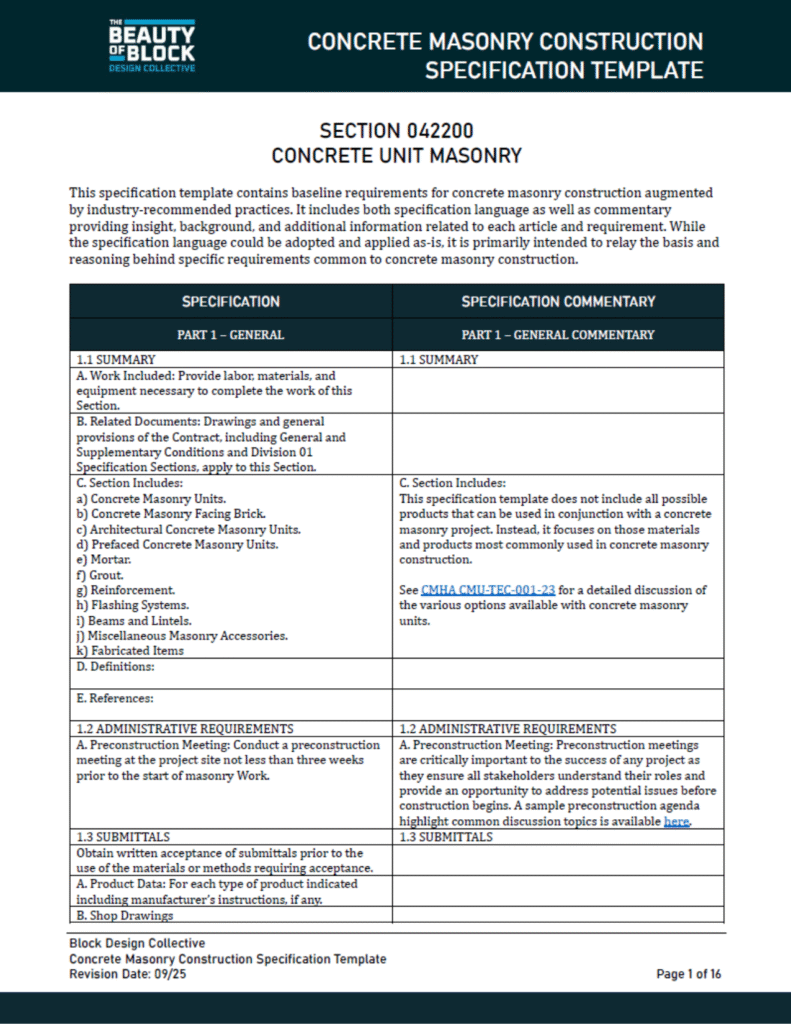
This specification template contains baseline requirements for concrete masonry construction augmented by industry-recommended practices. It includes both specification language as well as commentary providing insight, background, and additional information related to each article and requirement. While the specification language could be adopted and applied as-is, it is primarily intended to relay the basis and reasoning behind specific requirements common to concrete masonry construction.
Designer Checklist for Concrete Masonry Partitions Based on TMS 402/602-22

Concrete masonry partition walls are interior walls without structural function commonly used for space separation, fire resistance, and sound insulation. While partitions do not carry vertical loads other than their own weight, they are subject to lateral loading due to HVAC pressurization, occupants, seismic loads, and internal pressures from external wind entering into the structure through openings or small leakage paths. This checklist is applicable to concrete masonry partitions based on TMS 402/602-22.
TMS 402 contains design modeling options for both allowable stress design (ASD) and strength design (SD). Where design checks differ between these two modeling approaches, they are addressed separately in this Checklist.
Design for Dry Single-Wythe Concrete Masonry Walls
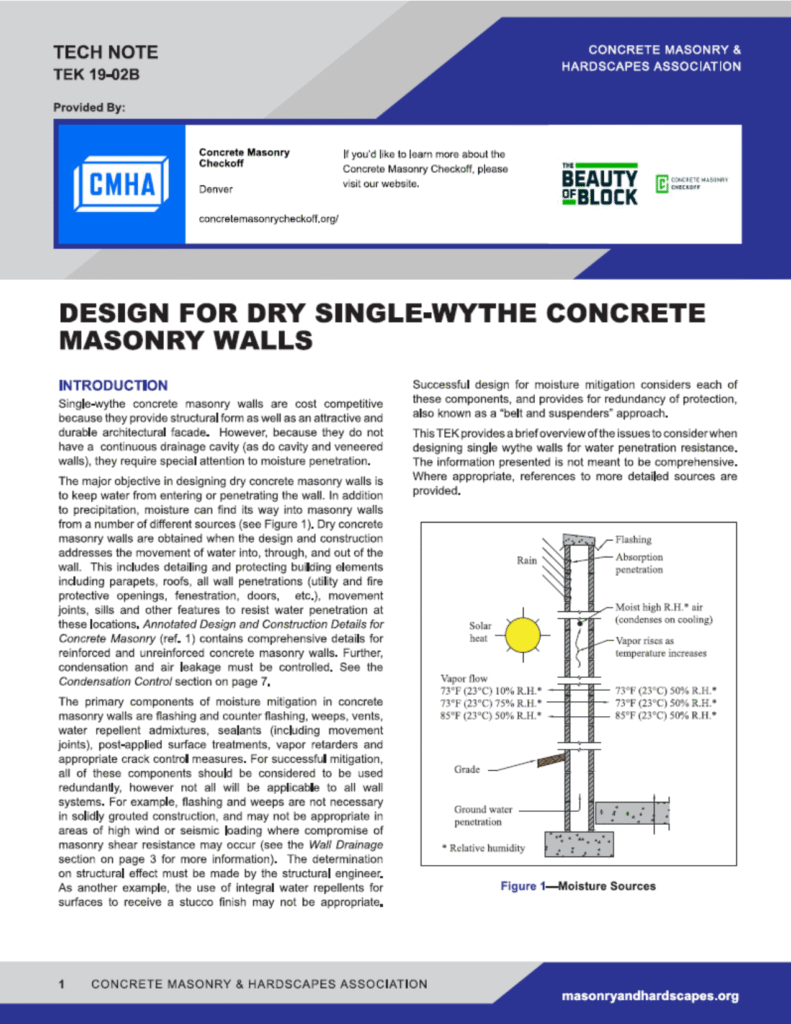
Single-wythe concrete masonry walls are cost competitive because they provide structural form as well as an attractive and durable architectural facade. However, because they do not have a continuous drainage cavity (as do cavity and veneered walls), they require special attention to moisture penetration.
Joint Sealants for Concrete Masonry Walls
Successfully sealing joints, such as control joints and around door jambs and window frames, in concrete masonry walls depends on the overall design and construction of the entire building envelope. Movement joints (also called control joints) are needed in some concrete masonry walls to accommodate drying shrinkage, thermal movements, and movements between different building components. Movement joints, joints around fenestration, doors and penetrations, and isolation joints (joints at dissimilar material interfaces) rely on joint sealants to help preserve the overall weather-tightness of the building envelope. In addition, properly sealed joints may be required to meet a specified fire resistance rating or sound transmission class.