
Specifying Fire Resistance Ratings for Concrete Masonry Construction
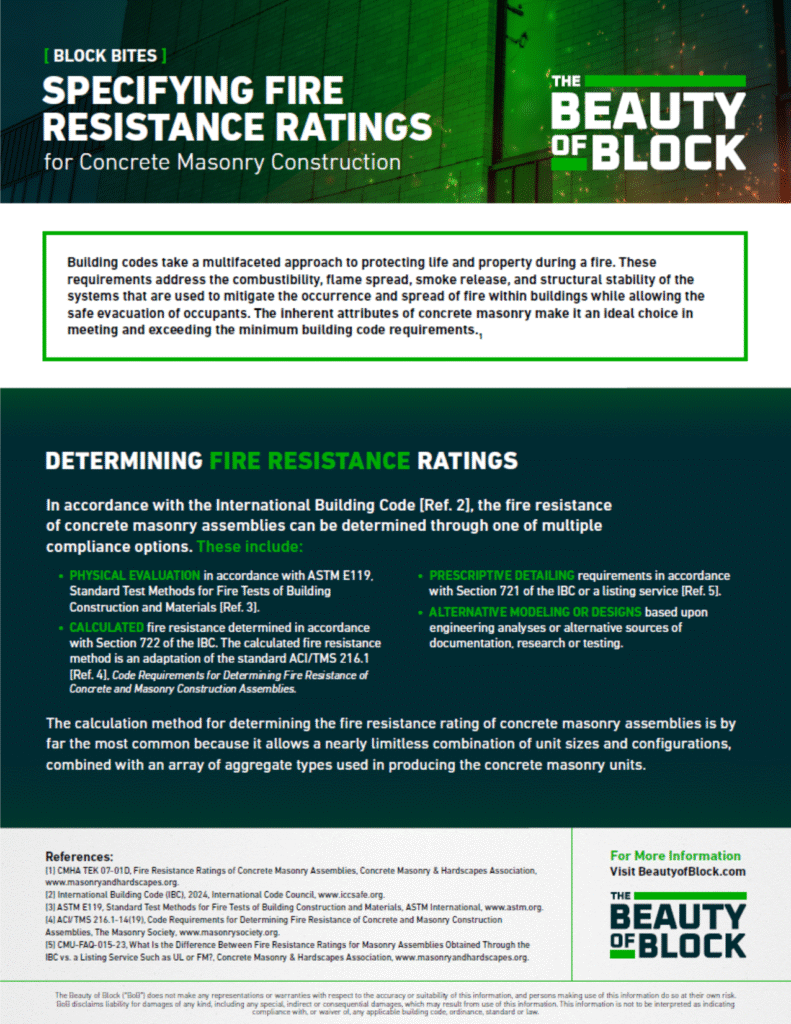
Building codes take a multifaceted approach to protecting life and property during a fire. These requirements address the combustibility, flame spread, smoke release, and structural stability of the systems that are used to mitigate the occurrence and spread of fire within buildings while allowing the safe evacuation of occupants. The inherent attributes of concrete masonry make it an ideal choice in meeting and exceeding the minimum building code requirements.
Moisture Control for Concrete Masonry Wall Construction

Effective moisture control in concrete masonry unit (CMU) walls requires the integration of quality materials, precise detailing and proper workmanship. The coordinated use of integral water repellents (IWR) in both block and mortar, along with flashing, weeps, joint tooling, and breathable coatings, prevents water intrusion, promotes drying and ensures long-term durability.
Moisture management is not a single product but a system that must be specified and constructed correctly.
Sound Abatement and Concrete Masonry Construction
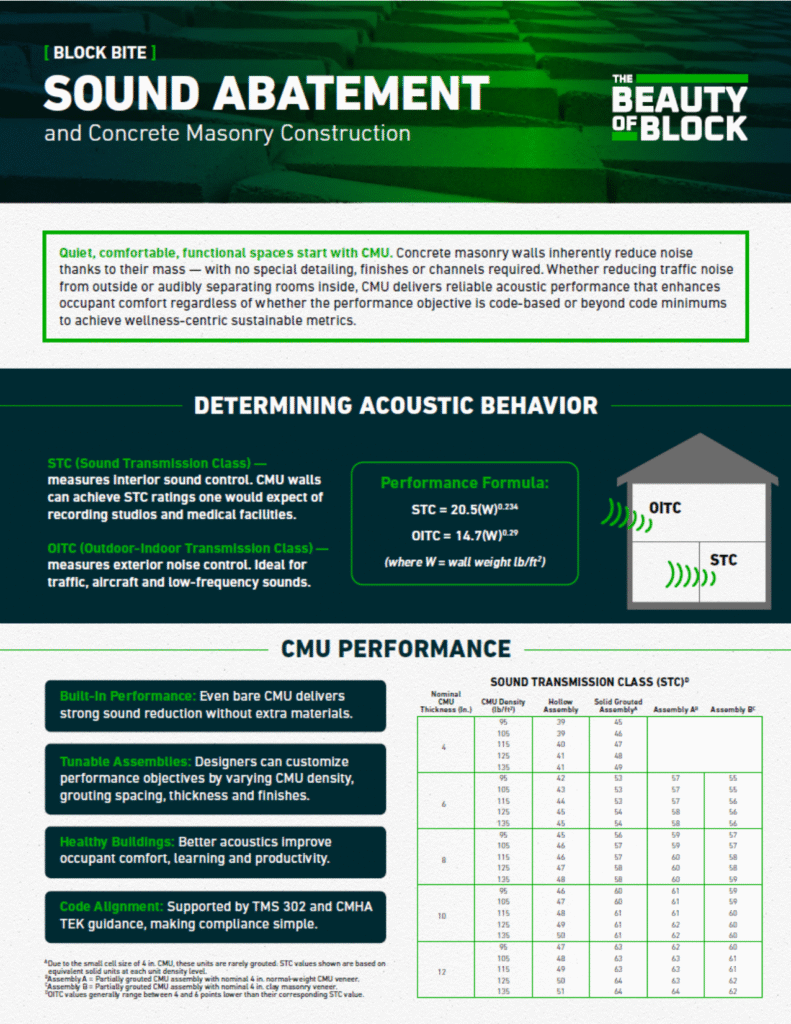
Quiet, comfortable, functional spaces start with CMU. Concrete masonry walls inherently reduce noise thanks to their mass — with no special detailing, finishes or channels required. Whether reducing traffic noise from outside or audibly separating rooms inside, CMU delivers reliable acoustic performance that enhances occupant comfort regardless of whether the performance objective is code-based or beyond code minimums to achieve wellness-centric sustainable metrics.
Thermal Performance of Concrete Masonry Construction
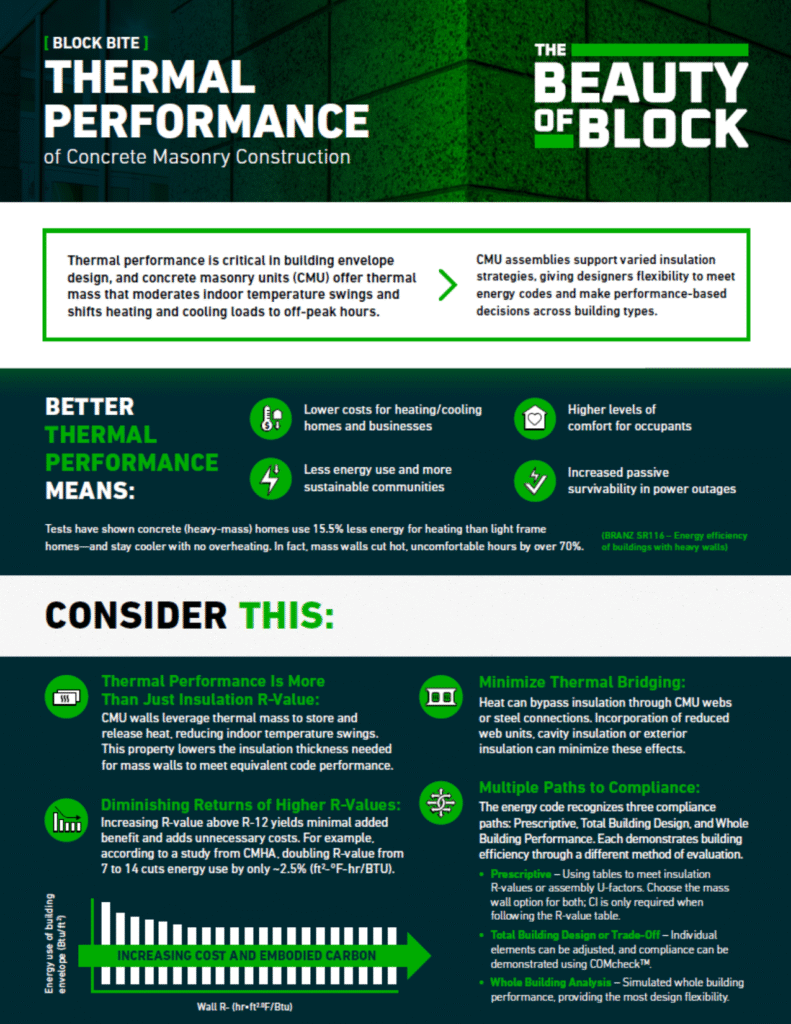
Thermal performance is critical in building envelope design, and concrete masonry units (CMU) offer thermal mass that moderates indoor temperature swings and shifts heating and cooling loads to off-peak hours. CMU assemblies support varied insulation strategies, giving designers flexibility to meet energy codes and make performance-based decisions across building types.
Section Properties and Wall Weights Calculator
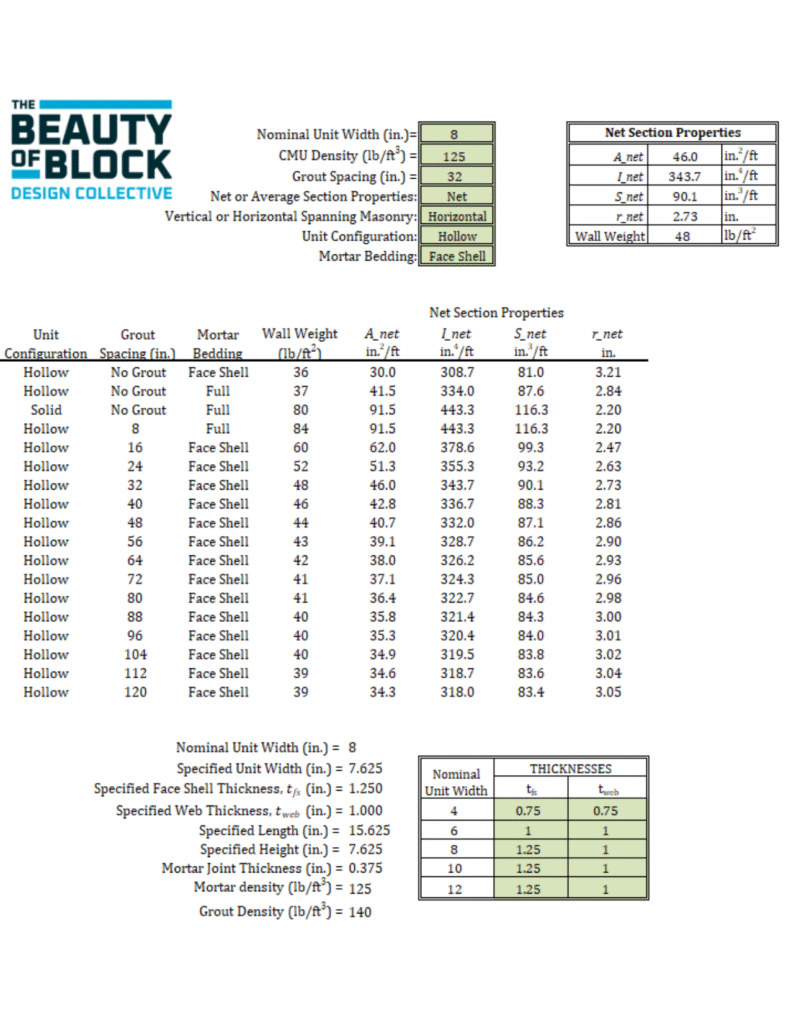
This calculator determines net and average cross-sectional properties based on user defined inputs. Net section properties represent the smallest cross-section of an assembly and are used for calculating assembly strength. Average section properties represent the average cross-section of an assembly and are used for calculating assembly stiffness. This calculator determines the net cross-sectional properties through a plane concurrent with a mortar joint while average section properties are determined through a plane concurrent with the mid-height or mid-length of a unit in the assembly.
Lap Splice & Development Length Calculator
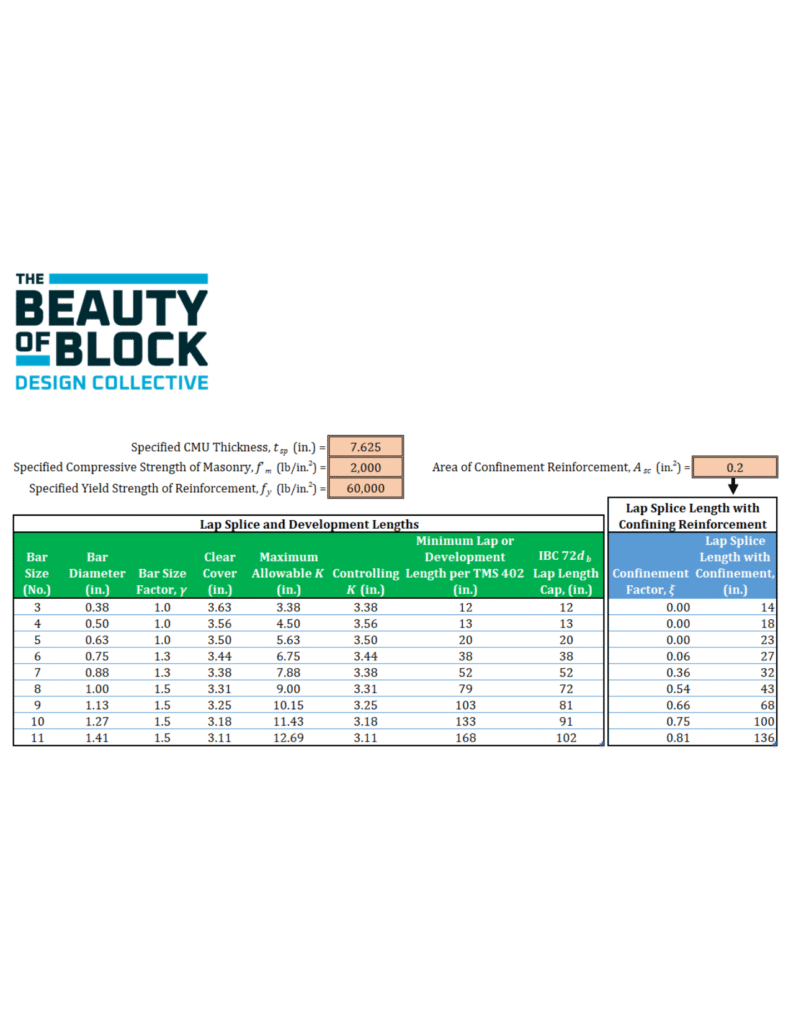
This calculator is based on the provisions of TMS 402/602-16 and TMS 402/602-22, Building Code Requirements and Specification for Masonry Structures. As there is no functional difference between the requirements of these two editions of the masonry design standard pertaining to the determination of minimum lap and development lengths, either edition is applicable.
Thermal Catalog of Concrete Masonry Assemblies, 2nd Edition
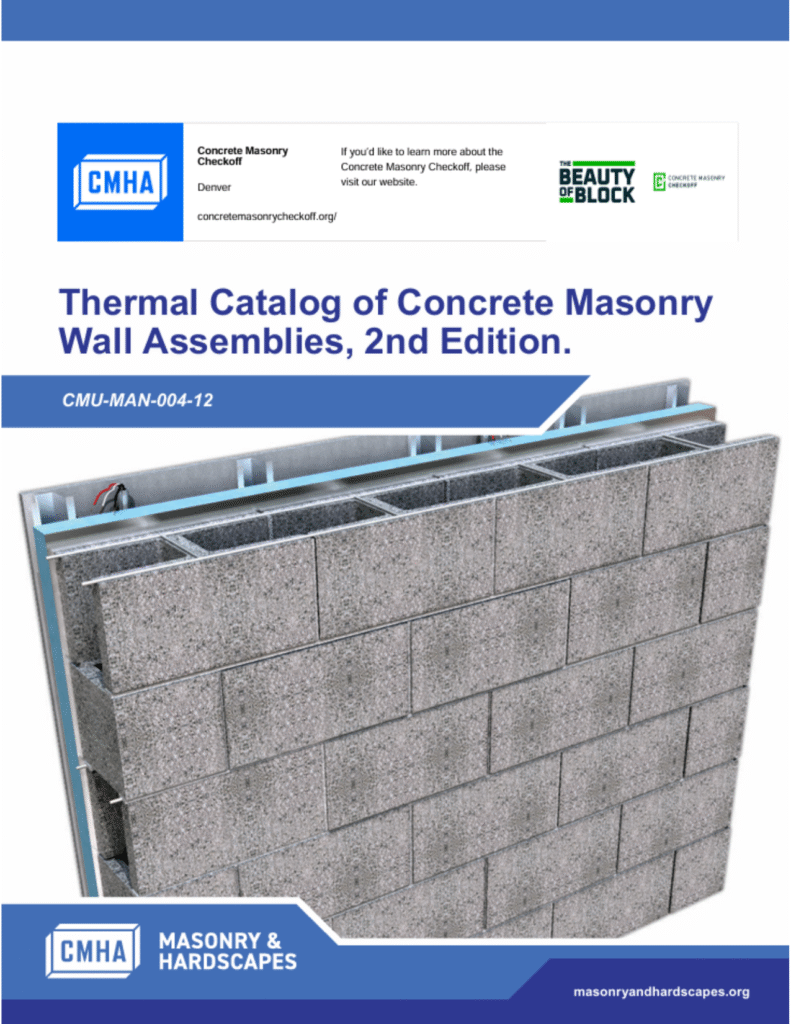
Energy codes continue to evolve and requirements for building envelopes continue to tighten. Fortunately, concrete masonry construction provides a wide variety of options to meet the energy needs of nearly every project. This catalog of assemblies provides code-supported R-values and U-factors for thousands of concrete masonry assemblies. Single-wythe, multi-wythe, various insulation locations, and additional finish systems are all included. Assemblies from R-3 to R-30 and more can be found in this guide.
Outdoor-Indoor Transmission Class of Concrete Masonry Walls
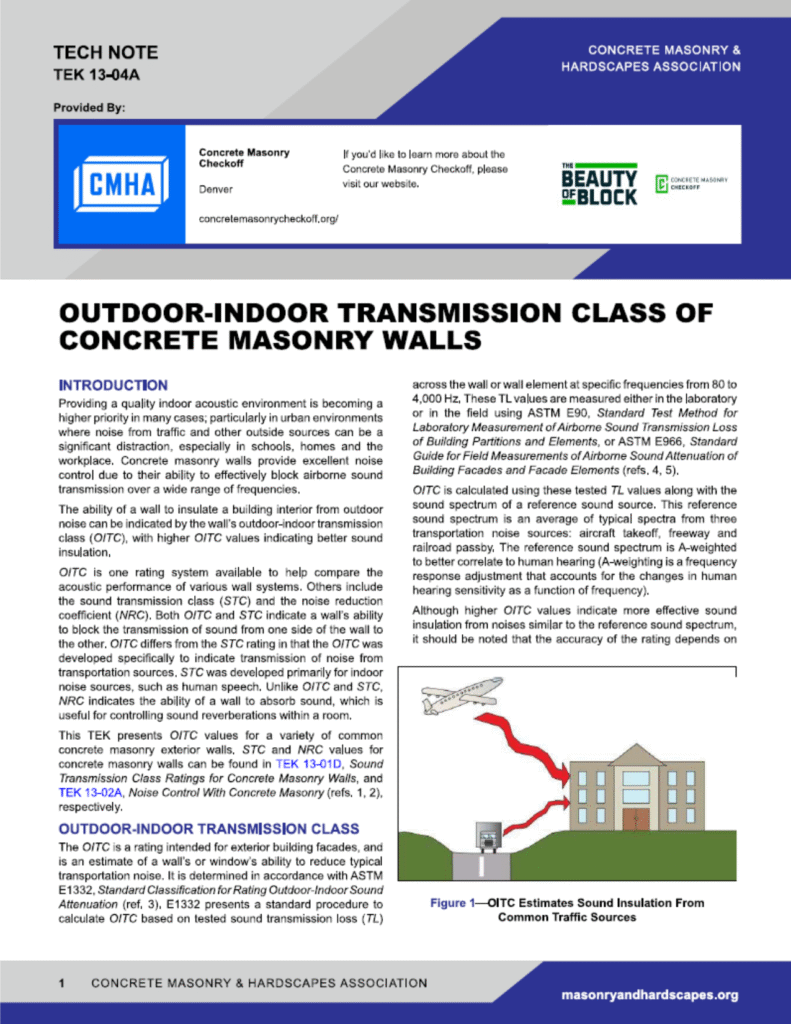
Providing a quality indoor acoustic environment is becoming a higher priority in many cases; particularly in urban environments where noise from traffic and other outside sources can be a significant distraction, especially in schools, homes and the workplace. Concrete masonry walls provide excellent noise control due to their ability to effectively block airborne sound transmission over a wide range of frequencies.
Noise Control with Concrete Masonry
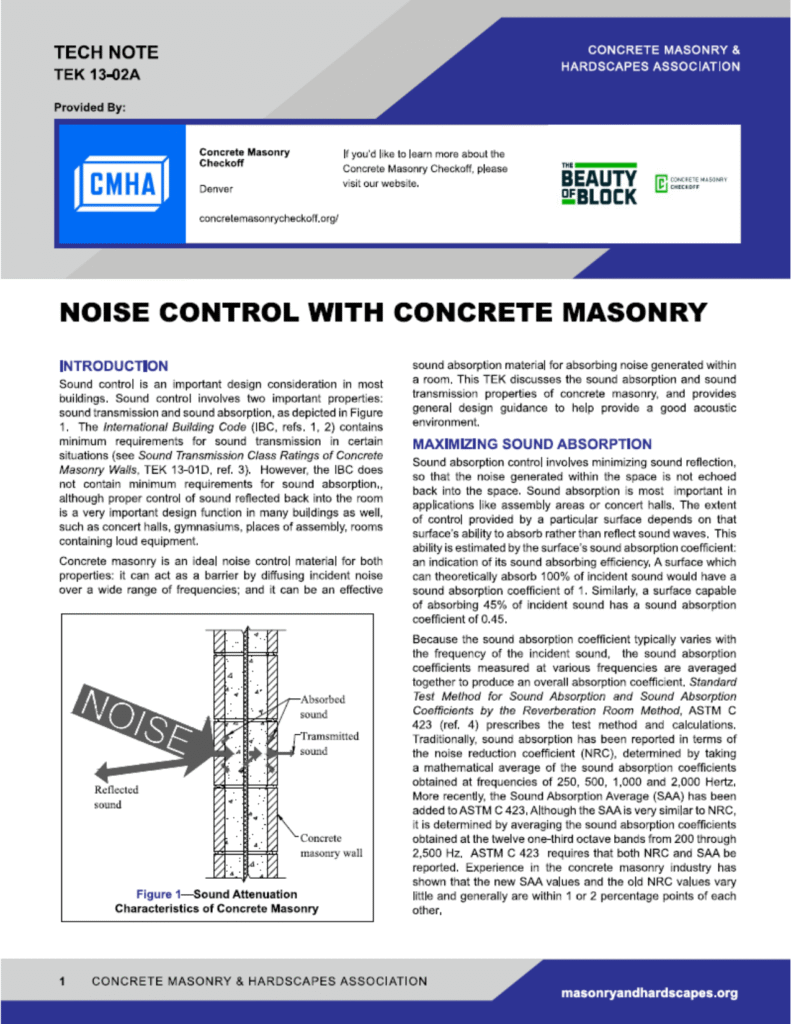
Sound control is an important design consideration in most buildings. Sound control involves two important properties: sound transmission and sound absorption, as depicted in Figure 1. The International Building Code (IBC, refs. 1, 2) contains minimum requirements for sound transmission in certain situations (see Sound Transmission Class Ratings of Concrete Masonry Walls, TEK 13-01D, ref. 3). However, the IBC does not contain minimum requirements for sound absorption, although proper control of sound reflected back into the room is a very important design function in many buildings as well, such as concert halls, gymnasiums, places of assembly, rooms containing loud equipment.
Sound Transmission Class Ratings for Concrete Masonry Walls
Unwanted noise can be a major distraction, whether at school, work or home. Concrete masonry walls are often used for their ability to isolate and dissipate noise. Concrete masonry offers excellent noise control in two ways. First, it effectively blocks airborne sound transmission over a wide range of frequencies. Second, concrete masonry effectively absorbs noise, thereby diminishing noise intensity. Because of these abilities, concrete masonry has been used successfully in applications ranging from party walls to hotel separation walls, and even highway sound barriers.