
Concrete Masonry: Navigating Energy Codes to Maximize Thermal Mass Performance
This course examines how concrete masonry’s thermal mass contributes to energy efficiency across a range of climate zones and building types. It describes the role of heat capacity and mass wall behavior in overall thermal performance and outlines how these attributes are addressed within current energy codes. The session reviews prescriptive, trade-off, and whole-building performance pathways in ASHRAE 90.1 and the IECC, highlighting how CMU assemblies are evaluated in each method. The course also presents commonly used compliance tools, and shows how they support energy-code documentation for mass-wall designs.
What Non-Engineers Need to Know About Concrete Masonry

This course provides a foundational understanding of structural concrete masonry for professionals outside the field of structural engineering. It explores key aspects of concrete masonry systems, including block types, mortar and grout properties, reinforcement strategies, and design practices. Participants will gain insights into how structural masonry is applied in modern construction, its advantages over alternative systems, and the common design errors to avoid. Learners will understand the cost, time, and sustainability benefits of choosing efficient masonry solutions in building design.
Partition Wall Calculator
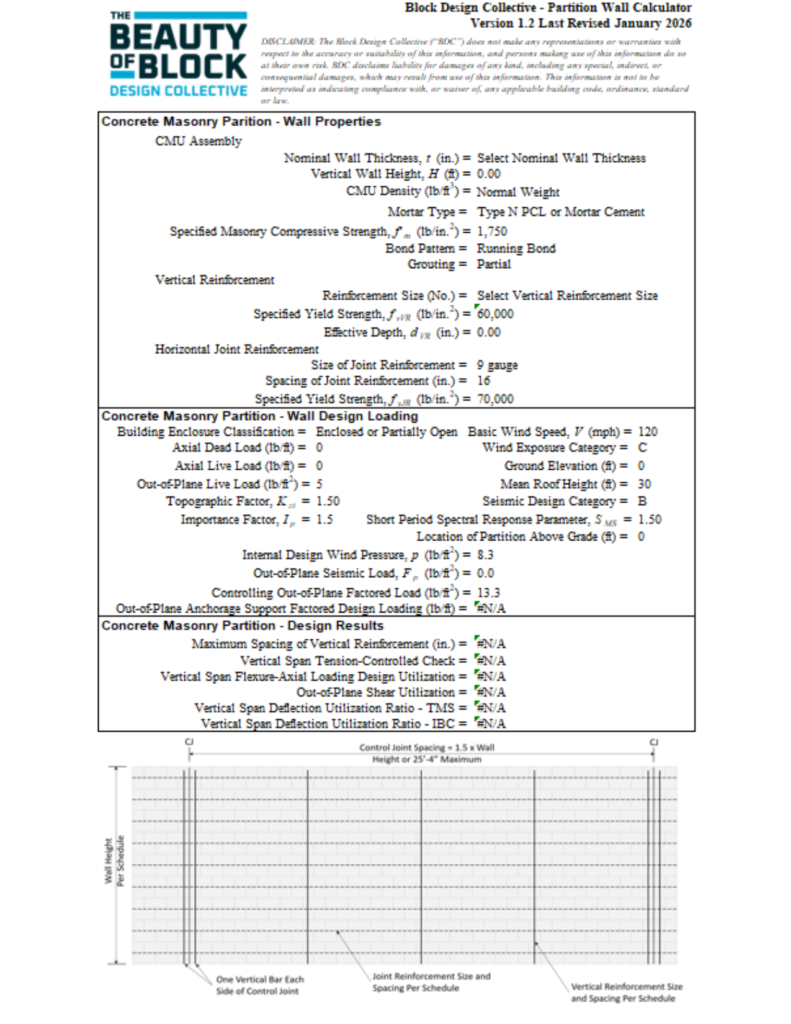
This calculator designs interior concrete masonry partition walls in accordance with the strength design provisions of TMS 402/602-22 and the loading criteria of ASCE/SEI 7-22. Highlighted cells are user inputs. Inputs and outputs use inch-pound units.
Cost-Savings Strategies for Concrete Masonry Construction
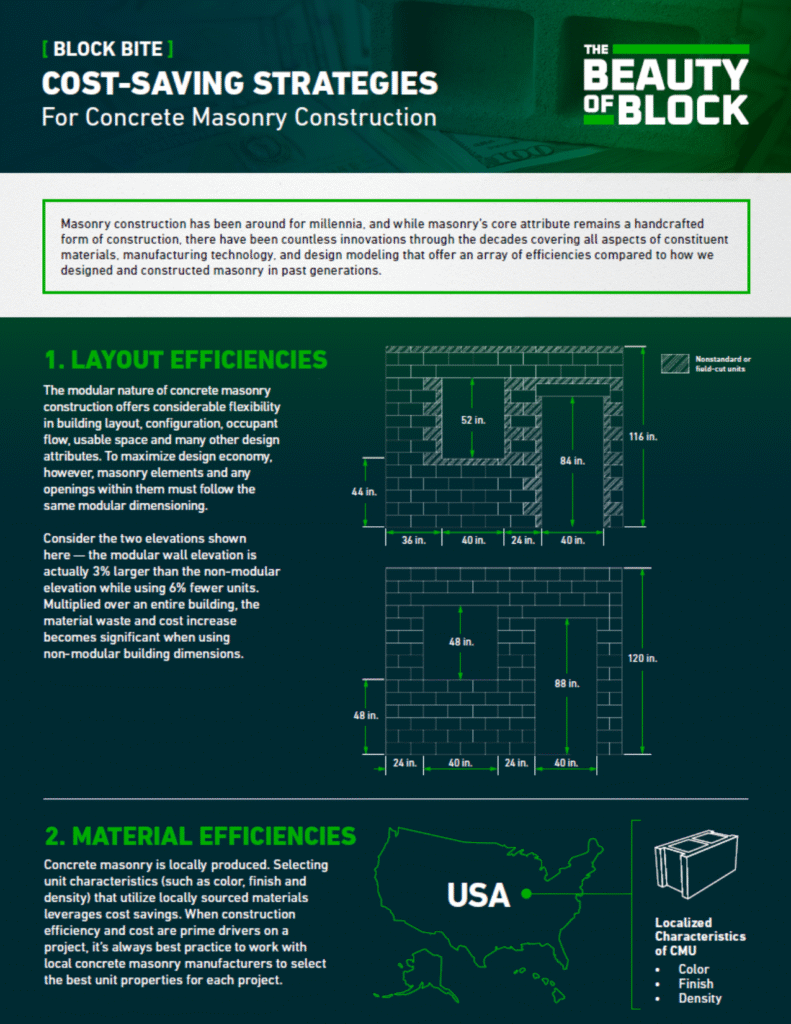
Masonry construction has been around for millennia, and while masonry’s core attribute remains a handcrafted form of construction, there have been countless innovations through the decades covering all aspects of constituent materials, manufacturing technology, and design modeling that offer an array of efficiencies compared to how we designed and constructed masonry in past generations.
Crack Control in Concrete Masonry Construction
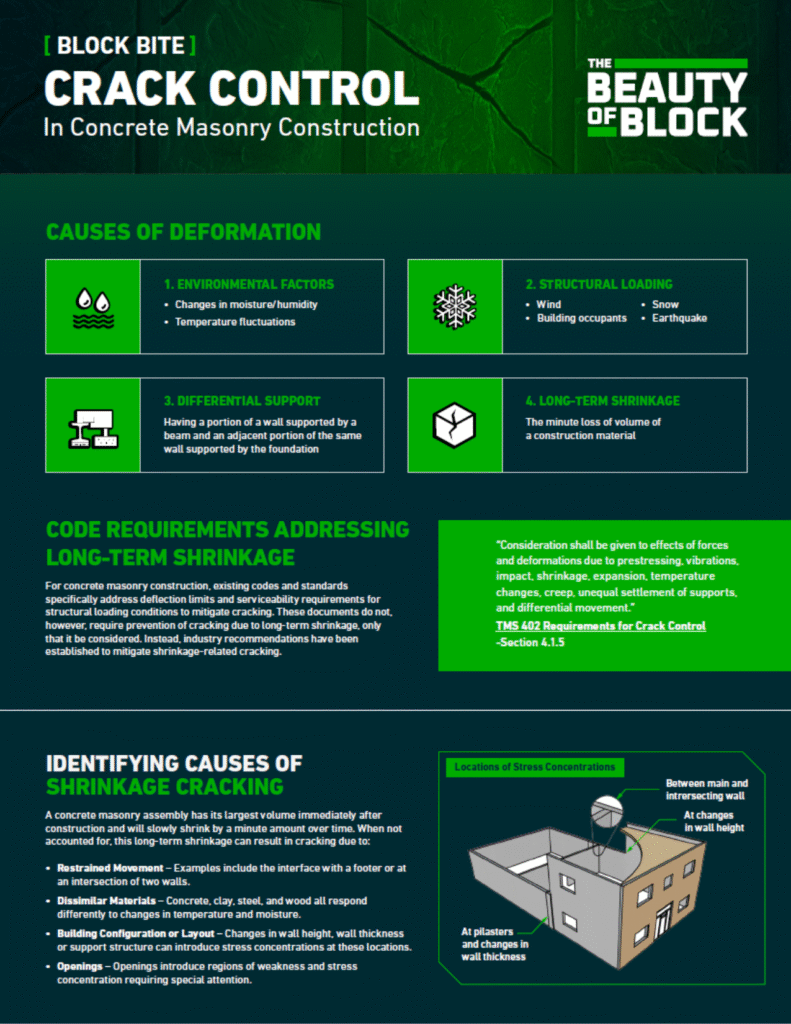
For concrete masonry construction, existing codes and standards specifically address deflection limits and serviceability requirements for structural loading conditions to mitigate cracking. These documents do not, however, require prevention of cracking due to long-term shrinkage, only that it be considered. Instead, industry recommendations have been established to mitigate shrinkage-related cracking.
Concrete Masonry: From Manufacturing to Structural Applications
This module explores the fundamentals of concrete masonry construction, beginning with the manufacturing process of concrete masonry units (CMUs) and examining both standard gray block and architectural finishes.
Participants will learn about various CMU shapes, sizes, and modular design principles that optimize construction efficiency. The course covers essential structural considerations, including the differences between unit compressive strength and specified masonry assembly strength (f’m), and examines how tall structures can be built using concrete masonry.
Additionally, the module introduces efficient design strategies that help reduce both project costs and embodied carbon, making concrete masonry an economical and sustainable building solution.
Crack Control Strategies for Concrete Masonry Construction
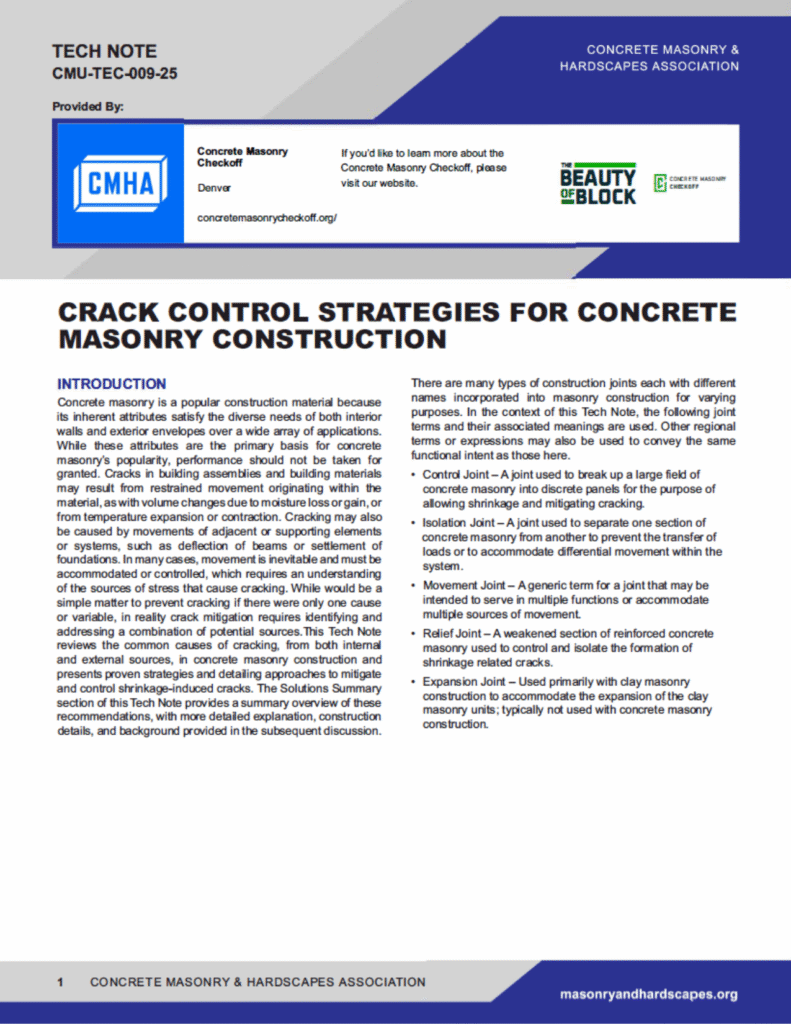
Concrete masonry is a popular construction material because its inherent attributes satisfy the diverse needs of both interior walls and exterior envelopes over a wide array of applications. While these attributes are the primary basis for concrete masonry’s popularity, performance should not be taken for granted. Cracks in building assemblies and building materials may result from restrained movement originating within the material, as with volume changes due to moisture loss or gain, or from temperature expansion or contraction. Cracking may also be caused by movements of adjacent or supporting elements or systems, such as deflection of beams or settlement of foundations. In many cases, movement is inevitable and must be accommodated or controlled, which requires an understanding of the sources of stress that cause cracking. While would be a simple matter to prevent cracking if there were only one cause or variable, in reality crack mitigation requires identifying and addressing a combination of potential sources.This Tech Note reviews the common causes of cracking, from both internal and external sources, in concrete masonry construction and presents proven strategies and detailing approaches to mitigate and control shrinkage-induced cracks. The Solutions Summary section of this Tech Note provides a summary overview of these recommendations, with more detailed explanation, construction details, and background provided in the subsequent discussion.
Properties and Characteristics in Concrete Masonry Construction
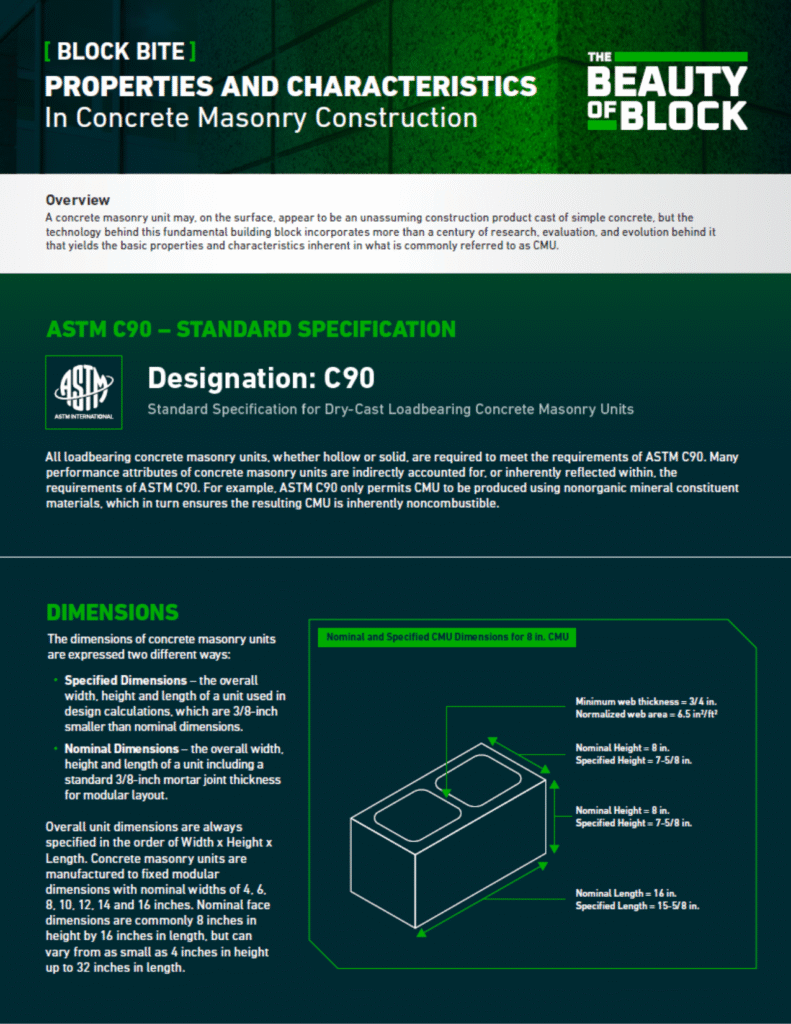
A concrete masonry unit may, on the surface, appear to be an unassuming construction product cast of simple concrete, but the technology behind this fundamental building block incorporates more than a century of research, evaluation, and evolution behind it that yields the basic properties and characteristics inherent in what is commonly referred to as CMU.
Masonry Compressive Strength Calculator
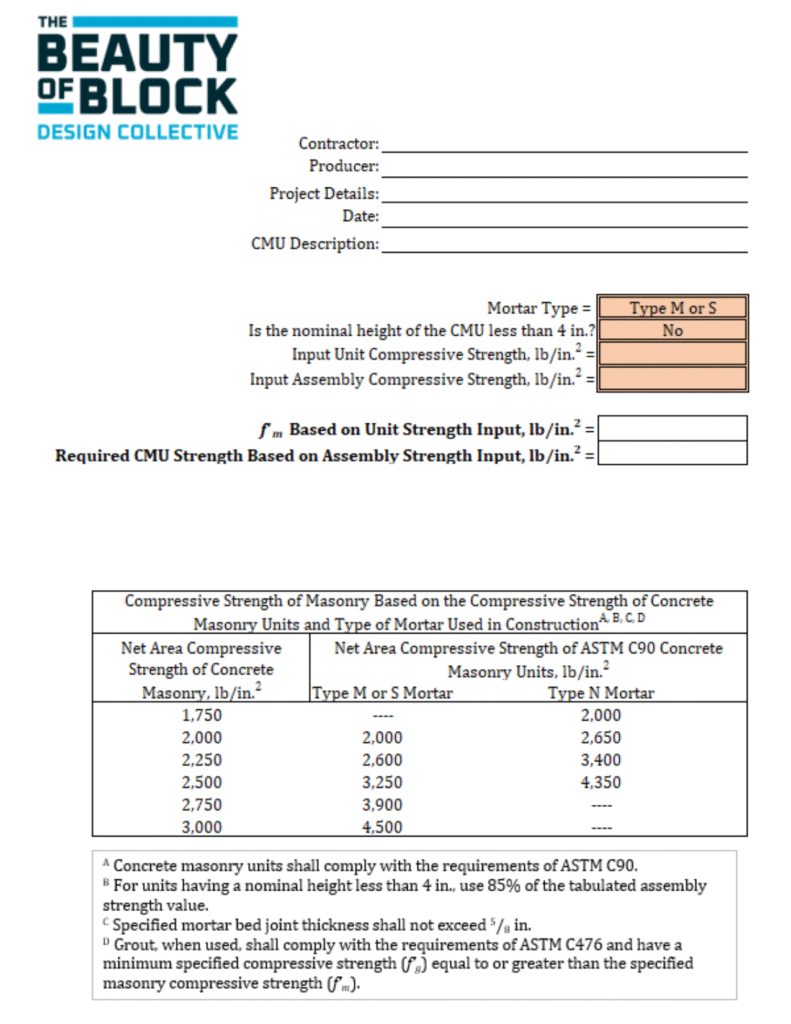
This calculator uses the unit strength table of TMS 602 (shown below) to determine the unit compressive strength required to achieve a user-specified masonry assembly compressive strength (f’m) – or determines the resulting assembly compressive strength (f’m) based on the user defined unit compressive strength. This calculator can be used with either the 2016 or 2022 editions of TMS 402/602.
Concrete Masonry Highway Sound Barriers
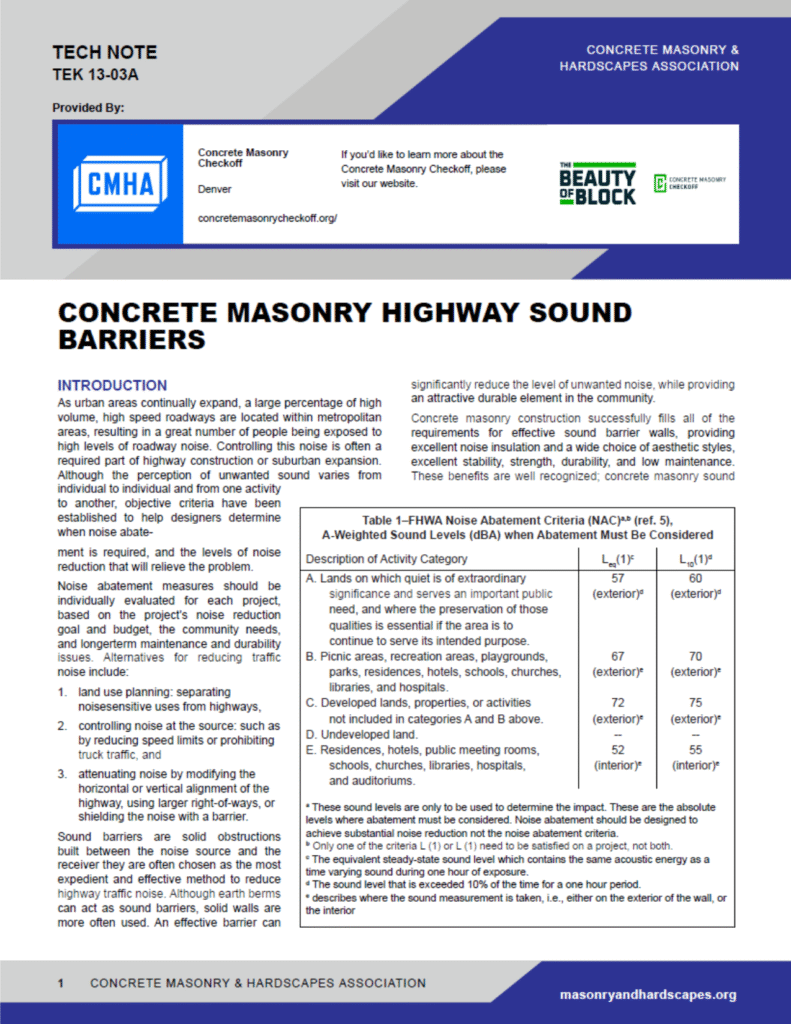
This TEK covers acoustic requirements for concrete masonry highway sound barriers. For structural design considerations, the reader is referred to Allowable Stress Design of Pier and Panel Highway Sound Barrier Walls (refs. 3).