
Maximizing Partition Wall Efficiency with 6 Inch CMU
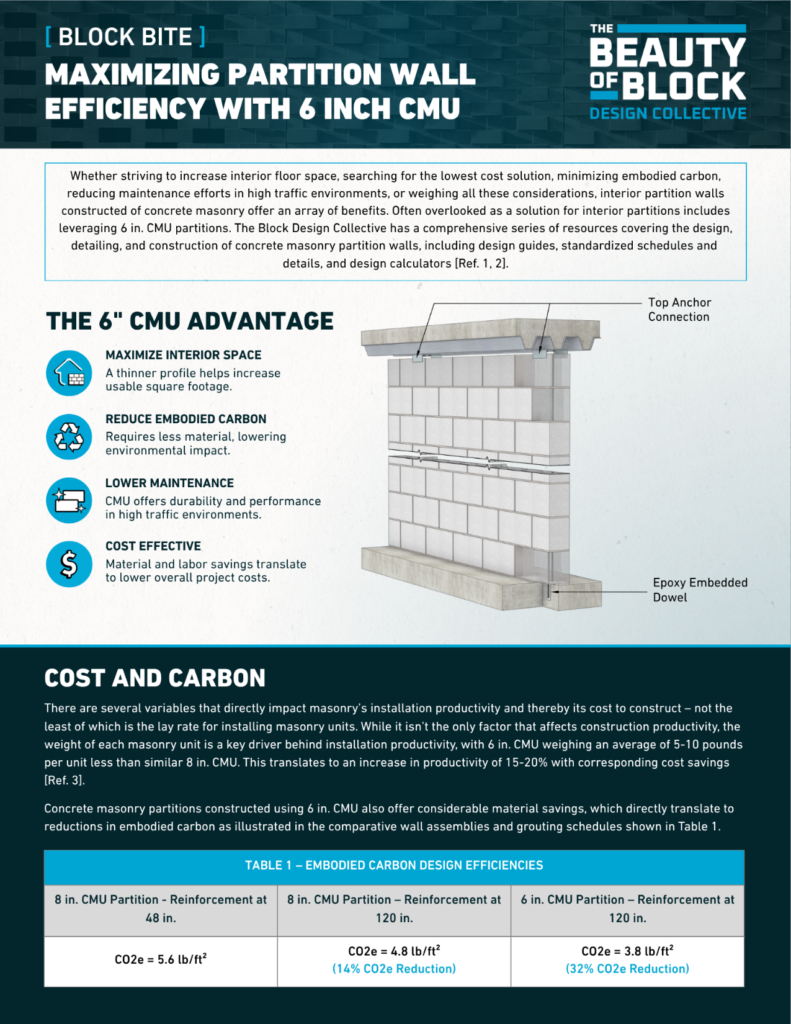
Whether striving to increase interior floor space, searching for the lowest cost solution, minimizing embodied carbon, reducing maintenance efforts in high traffic environments, or weighing all these considerations, interior partition walls constructed of concrete masonry offer an array of benefits. Often overlooked as a solution for interior partitions includes leveraging 6 in. CMU partitions. The Block Design Collective has a comprehensive series of resources covering the design, detailing, and construction of concrete masonry partition walls, including design guides, standardized schedules and
details, and design calculators [Ref. 1, 2].
General Design of Concrete Masonry Structures
This course explores the required concrete masonry design considerations to ensure a fully designed wall system that adheres to structural, fire, acoustic and energy design. The structural consideration will include the basis of design parameters, applications, design considerations, elemental design and limit states. While structural design is important, the course will discuss our ensuring fire, acoustical and energy compliance must also fit into the requirements of the wall system.
Concrete Masonry Highway Sound Barriers
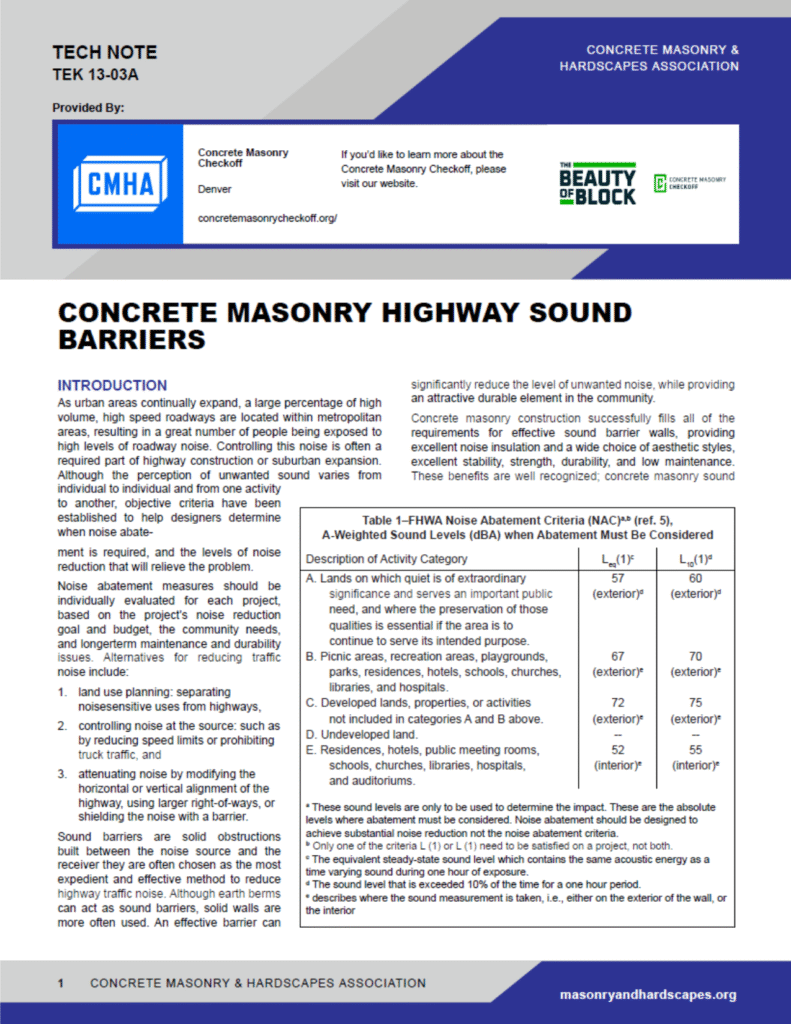
This TEK covers acoustic requirements for concrete masonry highway sound barriers. For structural design considerations, the reader is referred to Allowable Stress Design of Pier and Panel Highway Sound Barrier Walls (refs. 3).
Sound Abatement and Concrete Masonry Construction
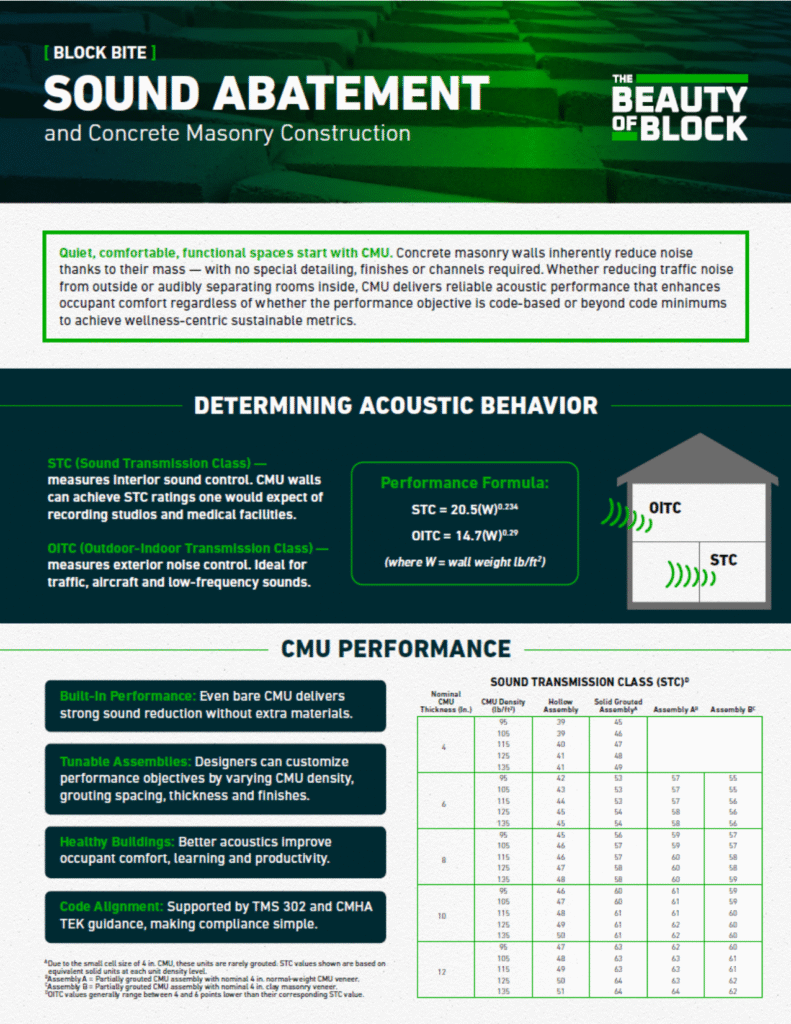
Quiet, comfortable, functional spaces start with CMU. Concrete masonry walls inherently reduce noise thanks to their mass — with no special detailing, finishes or channels required. Whether reducing traffic noise from outside or audibly separating rooms inside, CMU delivers reliable acoustic performance that enhances occupant comfort regardless of whether the performance objective is code-based or beyond code minimums to achieve wellness-centric sustainable metrics.
Outdoor-Indoor Transmission Class of Concrete Masonry Walls
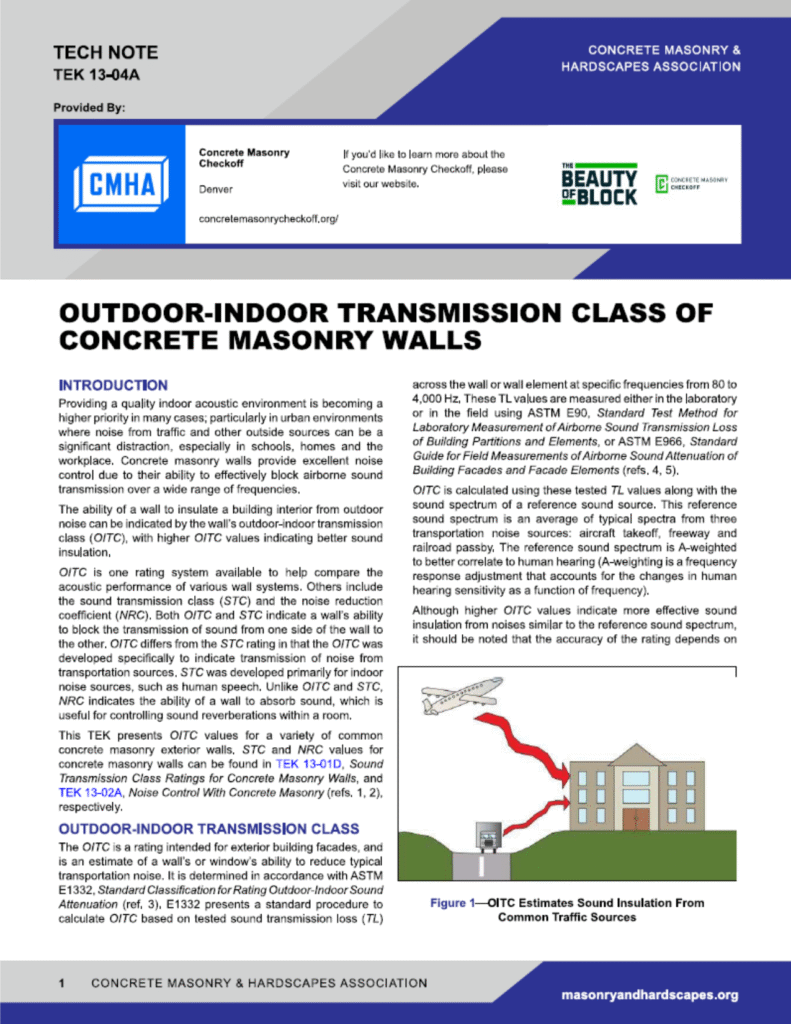
Providing a quality indoor acoustic environment is becoming a higher priority in many cases; particularly in urban environments where noise from traffic and other outside sources can be a significant distraction, especially in schools, homes and the workplace. Concrete masonry walls provide excellent noise control due to their ability to effectively block airborne sound transmission over a wide range of frequencies.
Noise Control with Concrete Masonry
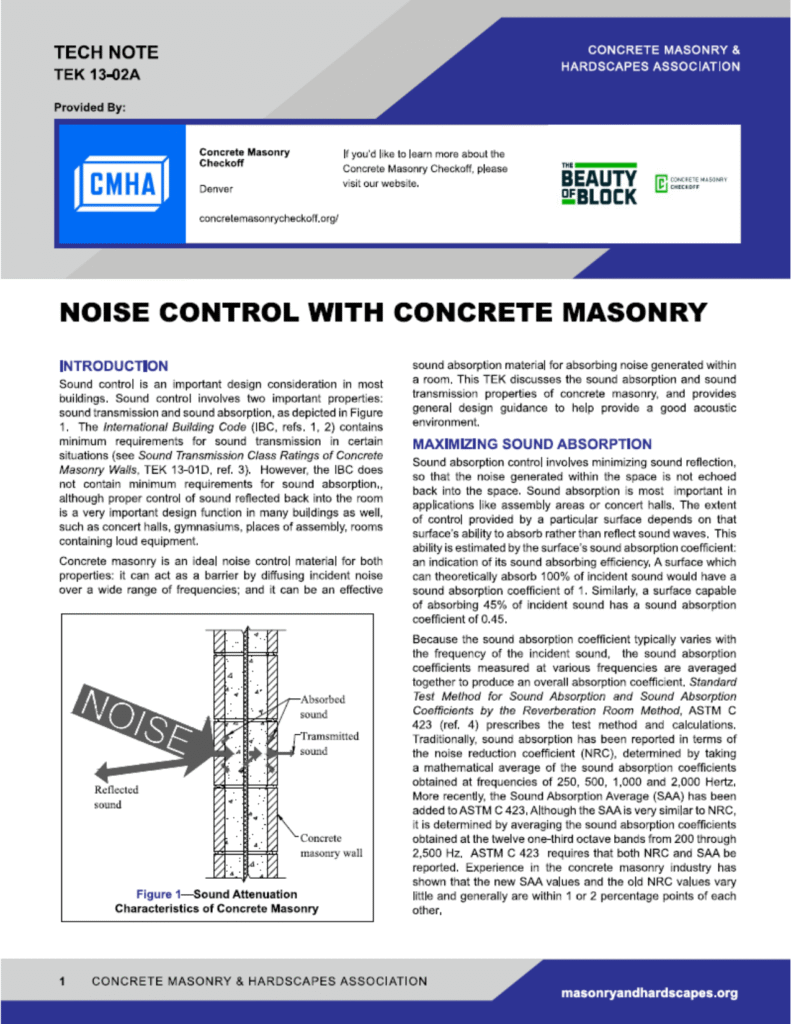
Sound control is an important design consideration in most buildings. Sound control involves two important properties: sound transmission and sound absorption, as depicted in Figure 1. The International Building Code (IBC, refs. 1, 2) contains minimum requirements for sound transmission in certain situations (see Sound Transmission Class Ratings of Concrete Masonry Walls, TEK 13-01D, ref. 3). However, the IBC does not contain minimum requirements for sound absorption, although proper control of sound reflected back into the room is a very important design function in many buildings as well, such as concert halls, gymnasiums, places of assembly, rooms containing loud equipment.
Sound Transmission Class Ratings for Concrete Masonry Walls
Unwanted noise can be a major distraction, whether at school, work or home. Concrete masonry walls are often used for their ability to isolate and dissipate noise. Concrete masonry offers excellent noise control in two ways. First, it effectively blocks airborne sound transmission over a wide range of frequencies. Second, concrete masonry effectively absorbs noise, thereby diminishing noise intensity. Because of these abilities, concrete masonry has been used successfully in applications ranging from party walls to hotel separation walls, and even highway sound barriers.
Core Performance: The 5 Ss of Concrete Masonry
Concrete masonry is commonly used for structural and architectural walls in buildings. Knowing the full extent of its applications and capabilities is important for designers to make resilient, sustainable, and cost-effective buildings.
The intent of this course is to provide a general overview of the properties and performance characteristics of concrete masonry walls. Attendees will learn about how to take advantage of and maximize the features and capabilities of concrete masonry units.
