
Reinforced 8 In. (SDC C) Detail
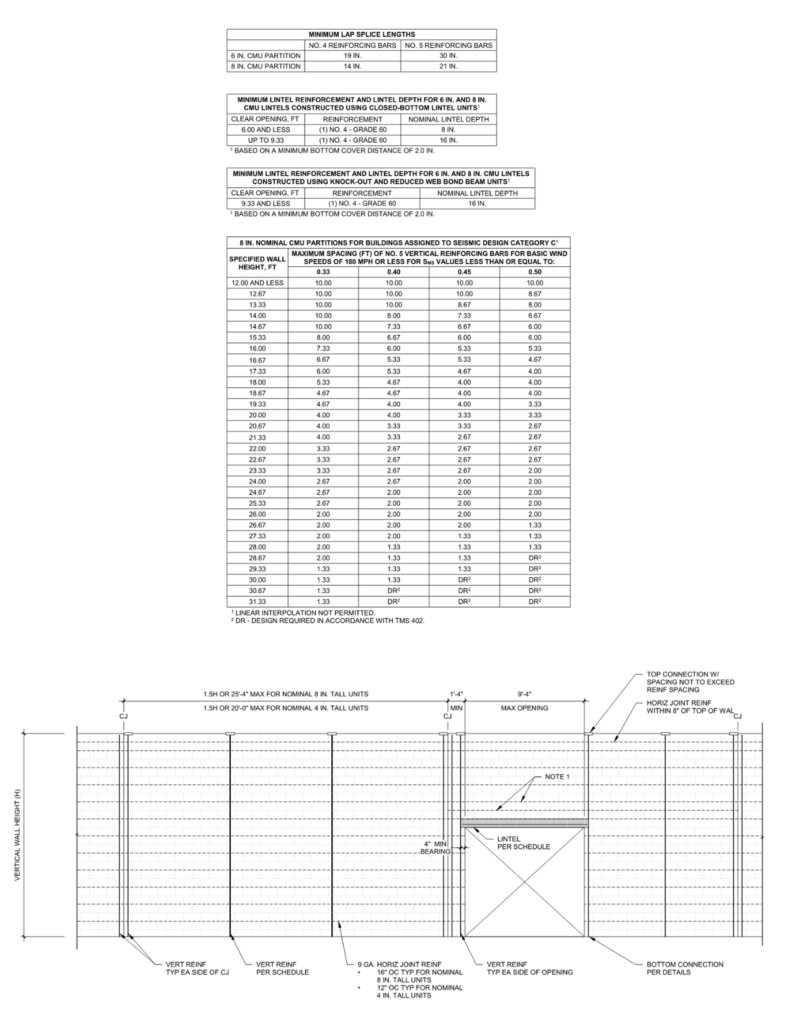
Partition wall detail for 8″ reinforced masonry wall.
Reinforced 8 In. (SDC A or B) Detail
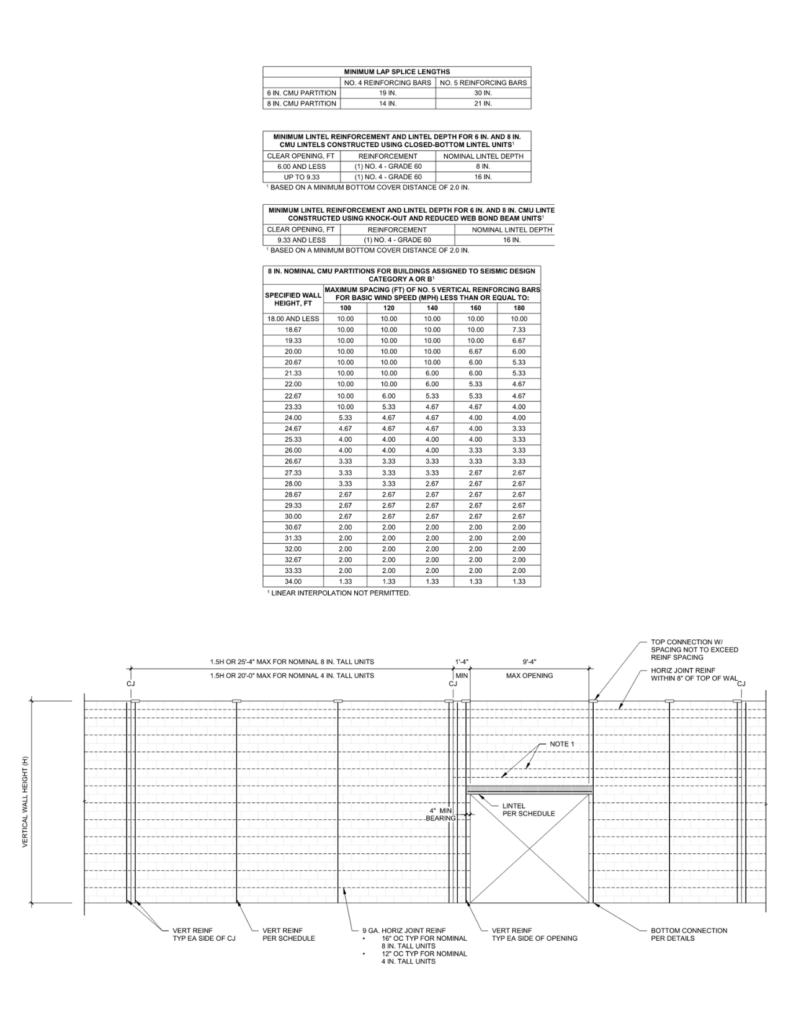
Partition wall detail for 8″ reinforced masonry wall.
Unreinforced 8 In. (SDC A or B) Detail
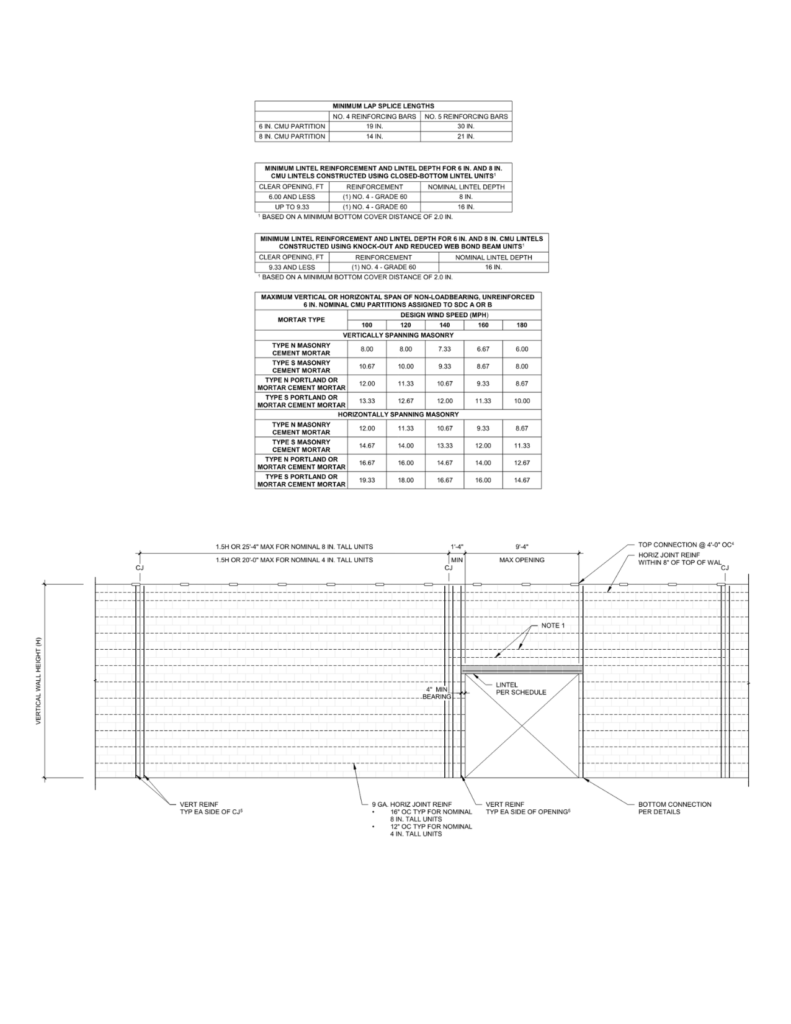
Partition wall detail for 8″ unreinforced masonry wall.
Unreinforced 6 In. (SDC A or B) Detail
Partition wall detail for 6″ unreinforced masonry wall.
Normalizing Delegated Design of Concrete Masonry
Delegated design and a project delivery method that many material industries utilize effectively to deliver a cost effective building. This presentation highlights the need to normalize delegated design for concrete masonry elements. This includes, lintels, elevator shaft walls, non-load bearing walls, and load bearing structures. This presentation will explore how the process can be delivered in today’s projects and resources available to make the effort minimal.
Architectural Concrete Masonry: Single-Wythe Walls
This course introduces the design and performance fundamentals of architectural single-wythe concrete masonry. Participants will explore how concrete masonry’s inherent durability, resilience, thermal mass, and low-embodied-carbon contribute to high-performing building envelopes. The program explains key strategies for moisture management—including surface protection, integral water repellents, flashing, weeps, and crack-control detailing to keep single-wythe CMU walls dry and long-lasting. Learners will examine energy-code compliance pathways for mass walls, insulation options, and how density, thermal mass, and assembly configuration influence energy performance. The course concludes with practical guidance on air and vapor barriers, utilities, sample panels, and cleaning procedures to ensure high-quality outcomes in architectural CMU projects.
Architectural Concrete Masonry: Veneers & Cavity Walls

Architectural concrete masonry anchored veneers combine beauty, durability, and low maintenance while offering architects significant design flexibility. This course examines the finishes, sizes, profiles, and colors that distinguish architectural CMU, and explores the high performance these systems achieve when coupled with concrete masonry cavity walls. Participants will review essential detailing recommendations for veneers, including how to accommodate openings, flashing, anchoring, and crack control strategies. The session also covers energy performance benefits, thermal mass advantages, and cavity wall insulation strategies, while emphasizing quality assurance through sample panels. The course finishes with discussing cleaning recommendations for architectural masonry.
Climate-Responsive Design: Balancing Resilience, Thermal Performance and Embodied Carbon with Concrete Masonry
This course explores how using concrete masonry units (CMU) in the built environment provides an integrated approach to climate-responsive design by simultaneously addressing three critical sustainability strategies: resilience, operational energy use, and embodied carbon reduction. Participants will examine how CMU construction offers inherent solutions to modern building challenges, from natural disasters and extreme weather events to energy conservation and carbon footprint reduction. The course demonstrates that CMU structures perform beyond code requirements without additional measures, providing durable, cost-effective buildings that support community resilience while contributing to low embodied carbon goals.
General Design of Concrete Masonry Structures
This course explores the required concrete masonry design considerations to ensure a fully designed wall system that adheres to structural, fire, acoustic and energy design. The structural consideration will include the basis of design parameters, applications, design considerations, elemental design and limit states. While structural design is important, the course will discuss our ensuring fire, acoustical and energy compliance must also fit into the requirements of the wall system.
Maximizing Concrete Masonry Performance Through Structural Design

This course will cover various design components of efficient structural masonry design. It is intended to help the audience understand the implications of structural design solutions and their impact on masonry performance. The goal is to offer actionable recommendations and standards that promote efficient, cost-effective masonry solutions.