The primary role of flashing is to intercept the flow of moisture through masonry and direct it to the exterior of the structure. Due to the abundant sources of moisture and the potentially detrimental effects it can have, the choice of flashing material, and the design and construction of flashing details, can often be as key to the performance of a masonry structure as that of the structural system.
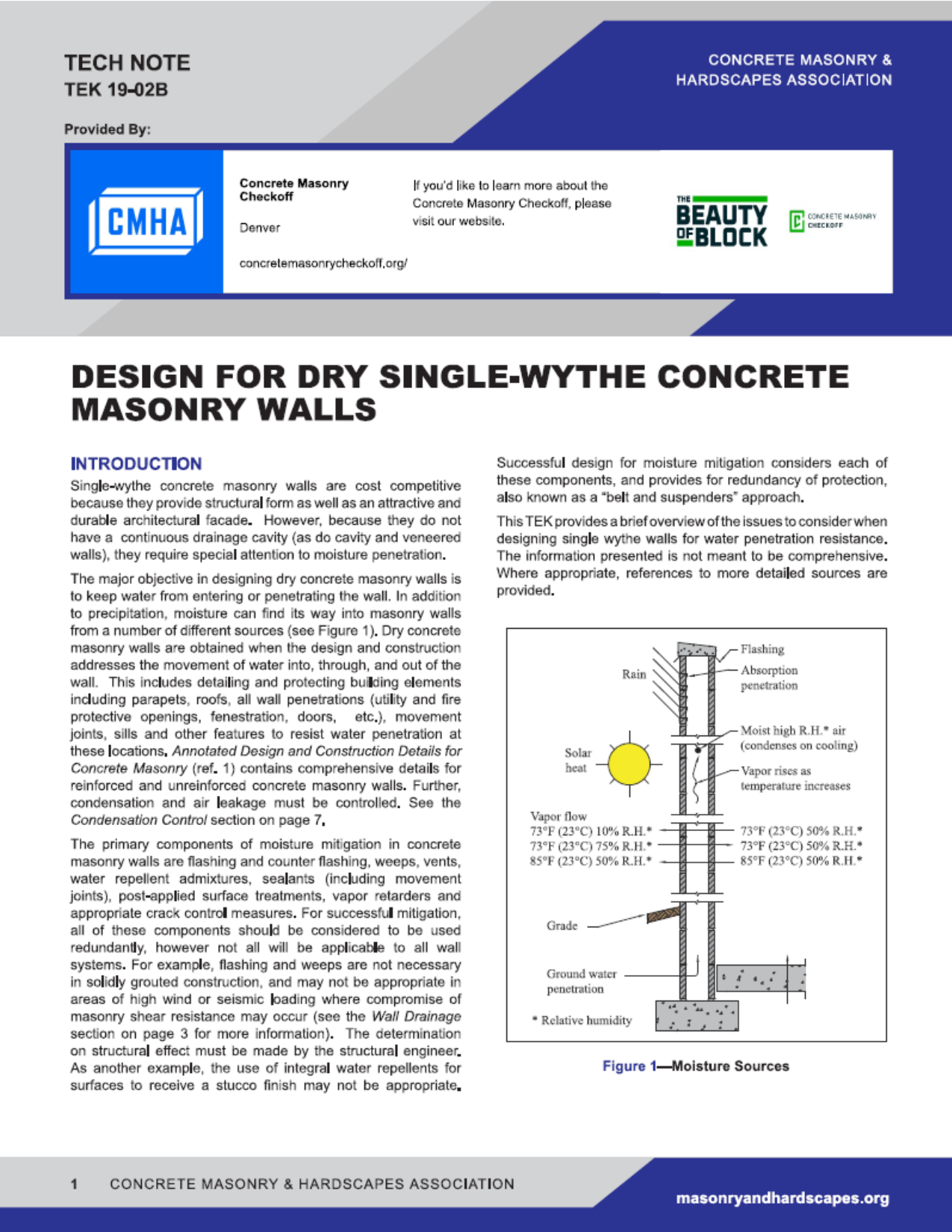
The type of flashing material to be used is governed by both environmental and design/build considerations. Environmental considerations include such factors as the physical state of moisture present (liquid, solid, or vapor), air movement, and temperature extremes as well as temperature differentials. Design/build considerations include the selection of the proper type of flashing material, location of the flashing, structural, and installation details. Drawings for flashing details, often the only method of communicating the necessary information between the designer and contractor, should be comprehensive and show sufficient detail for the proper interpretation and installation of flashing systems. TEK 19-05A Flashing Details for Concrete Masonry Walls (ref. 3) includes such details.
Although flashing is the primary focus of this TEK, it should be understood that the role of vapor retarders, air barriers, and insulation are also important elements to consider for any wall design as the performance of the entire system can be dependent on the design of its individual components.