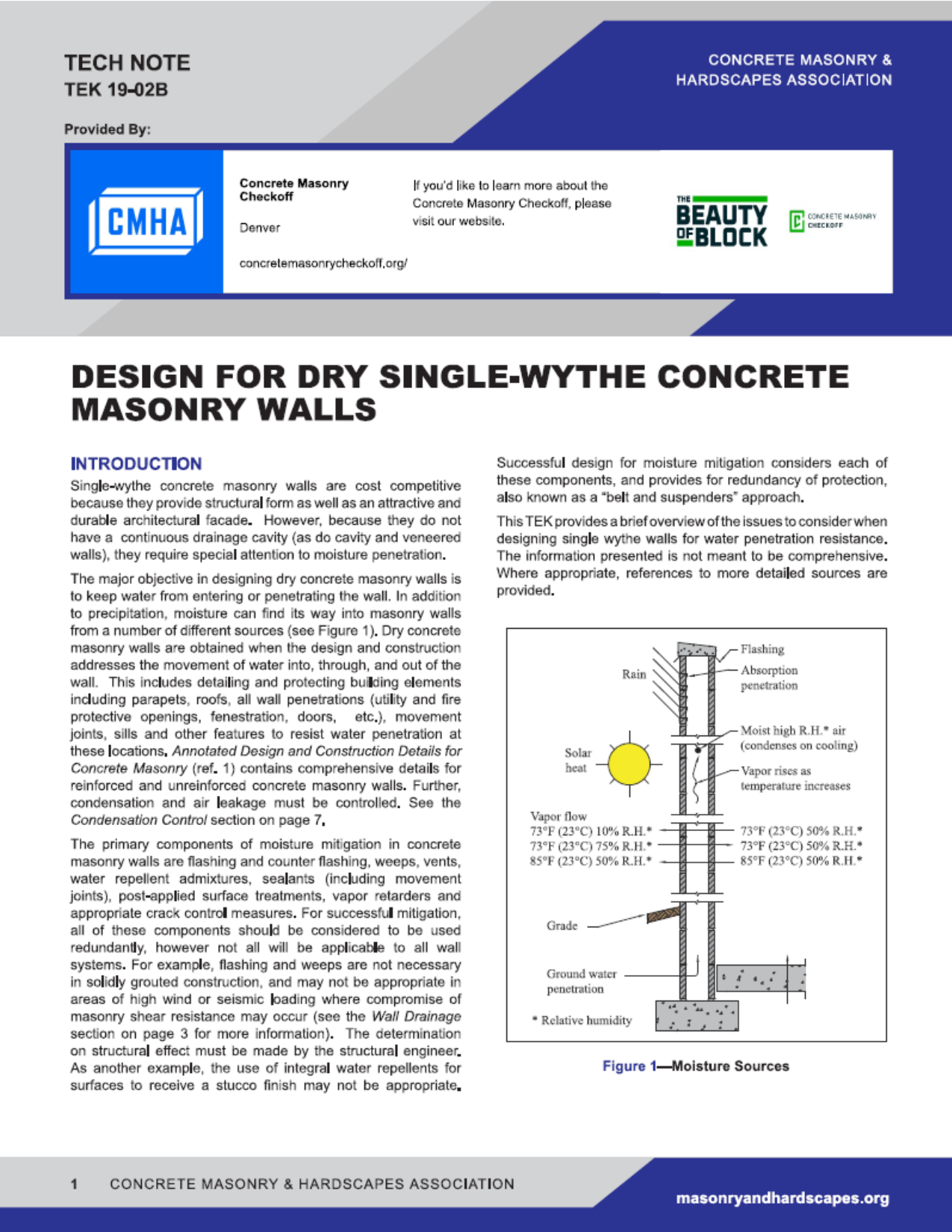
Condensation is one type of moisture to which buildings can potentially be exposed. In addition to above grade precipitates of rain, snow and ice as well as high humidity, several forms of below-grade ground-sourced moisture can also affect building envelopes. Concrete masonry walls are less affected by the problems associated with moisture infiltration and condensate than other building materials (i.e. corrosion, rotting, mold, delamination, blistering and volumetric changes). However, prolonged moisture accumulation can lead to reduced effectiveness of some types of thermal insulation, temporary frost formation and/or efflorescence. Fortunately, these problems can largely be avoided with proper wall design and construction.
Above- and below-grade condensation control strategies include: limiting air leakage and water vapor diffusion, using adequate amounts of thermal insulation, minimizing cold spots, utilizing free draining flashing and weeps, and allowing for drying. Because the condensation potential in a particular assembly can vary with the construction assembly, building type, building usage as well as environmental conditions and seasonal climate changes, however, these strategies may vary from project to project.